


Nelson Havi recently spoke out strongly on social media about Justice Josephine Mong’are, saying that he could no longer stay silent on concerns he has raised about her conduct.
He explained that although he had planned to wait before addressing issues involving certain judges, he felt this particular matter was too urgent to delay.
He called on advocates in Machakos to take action and push for her removal, describing her as incompetent and corrupt.
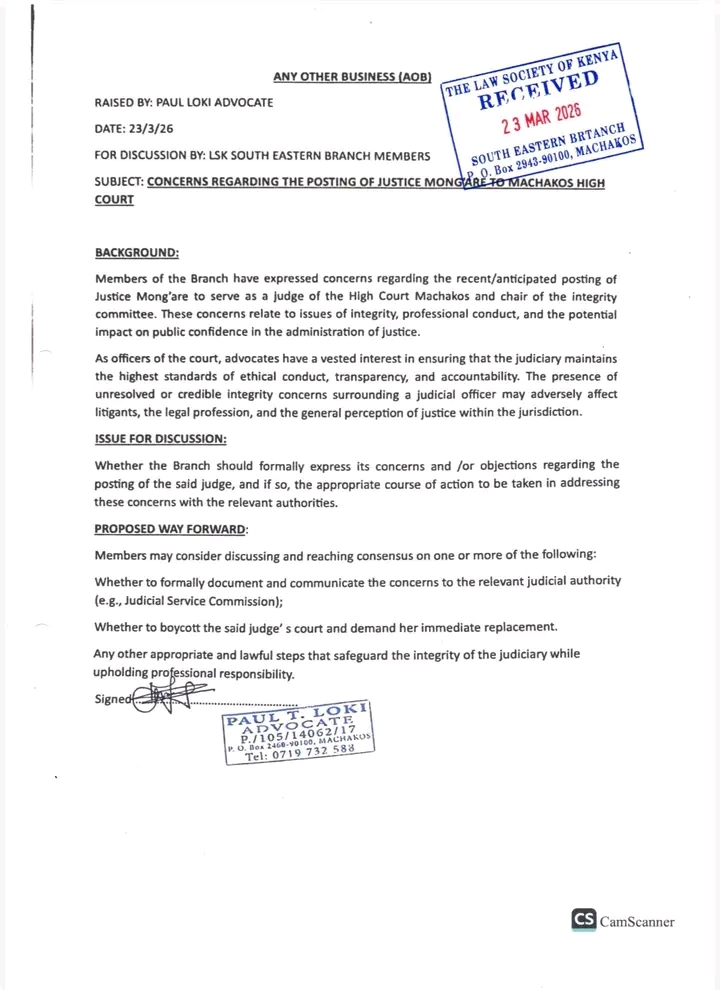
His remarks have drawn public attention to questions about accountability within the judiciary. Justice Mong’are is a High Court judge who was appointed in 2022. She has served in different divisions, including the Commercial and Tax Division in Nairobi and the Eldoret High Court. Before joining the bench, she had a long career as a lawyer after studying at the University of Nairobi and later advancing her education in the United States.
She has also been involved in legal organizations, including those that support women in the legal profession.
Havi’s criticism is based on issues he has raised over time. He has pointed to cases where he believes proper legal procedures were not followed.
In one instance, he referred to claims involving a bribe demand linked to a commercial dispute. He mentioned Joseph Mutava and alleged that there were reports connecting him to the matter.
Havi has taken further steps by filing complaints with the Judicial Service Commission, asking it to review the judge’s conduct in specific cases, including disputes involving business people.
For many Kenyans, courts are expected to deliver fair decisions based on the law. When questions are raised about a judge, it can affect confidence in the justice system as a whole. Havi suggested that lawyers appearing before her should first demand that she clears her name with the Ethics and Anti-Corruption Commission before continuing to handle cases.

In his view, a judge facing serious allegations should step aside until those issues are resolved.
At the same time, there are legal protections meant to preserve the independence of judges. In this situation, there have been court orders that limited certain actions against Justice Mong’are. Such decisions are often meant to ensure that judges are not exposed to pressure that could interfere with their work.
This creates a careful balance between holding judicial officers accountable and protecting them from undue influence.
Havi’s focus on Machakos also highlights the role of local legal communities. Lawyers working in that area interact closely with the courts and are often the first to notice how cases are handled. His call for them to act reflects frustration among some advocates who feel that certain issues are not addressed quickly enough.

