


The patience of Maina KE has finally reached a breaking point, marking a significant shift in his public relationship with the Homa Bay County Government. For a long time, he was known as one of the most dedicated voices defending Homa Bay Governor Gladys Wanga.
Among his peers and the public, he was celebrated as a true “Wanga person,” a loyalist who consistently stood by her political interests and defended her administration against critics.
However, the tone has now changed. He is no longer acting as a defender; he is speaking as a man who feels deeply betrayed and is mourning a loss that he believes was entirely avoidable.
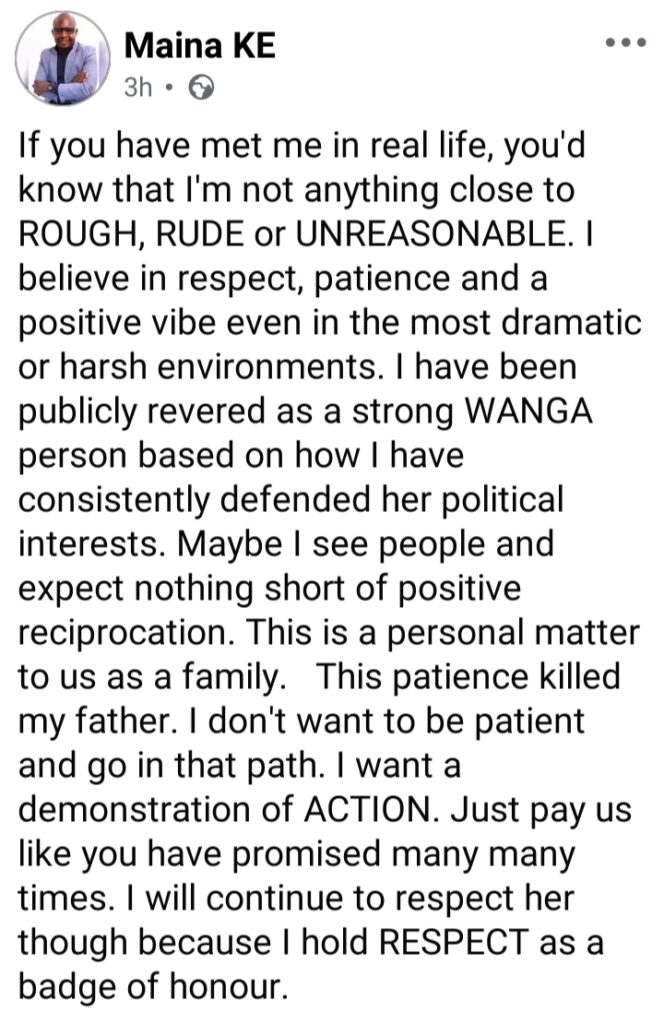
Maina KE’s recent message on social media is not about politics or personal grievances in the traditional sense. It is a desperate, heart-wrenching plea for a debt to be paid.
He describes himself as a naturally patient and reasonable person, someone who has tried to work with the system rather than against it.
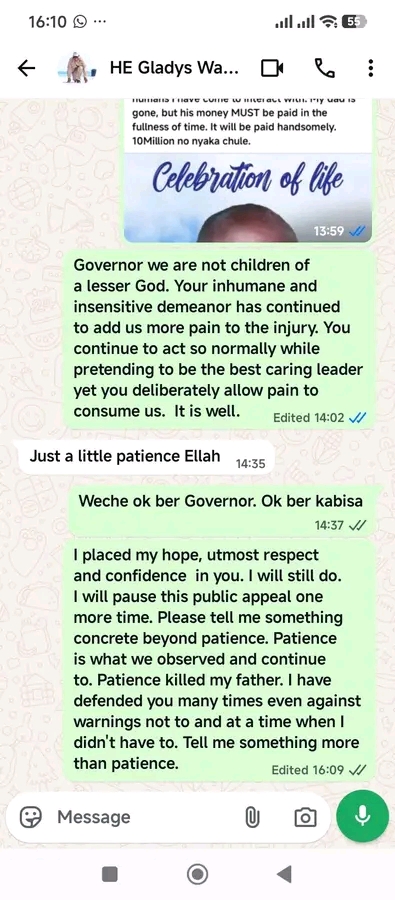
However, he makes a devastating statement that should serve as a wake-up call for the county leadership. He writes, “This patience killed my father. I don’t want to be patient and go in that path.”
These are not the words of a political opponent looking for an argument. This is a son holding the county government directly responsible for the death of his father, linking the extreme stress and financial strain of unpaid bills to a personal tragedy.
He is demanding action rather than empty promises, insisting that the county must pay what they have committed to paying many times over.
The reactions to his post suggest that Maina KE is far from alone in this struggle. The issue of pending bills has become a festering wound for many business people who have provided services to the county.
A commenter named Kamanga Junior shared the story of an acquaintance who supplied essential office items, including computers and printers worth 7.3 million Shillings, to the Homa Bay County Government in 2023.
These supplies were intended for dispensaries across 40 wards. The paperwork was completed, and the goods were delivered, yet not a single shilling has been paid.
Another observer, JW Wilkinson, echoed this frustration, pleading directly with the Governor to settle the debts. Wilkinson correctly pointed out that this is an issue beyond the power of supporters to fix; it is a matter of integrity and basic human decency that falls squarely on the Governor’s shoulders.
Despite the heartache and the anger, Maina KE’s message is not one of hatred. He makes it clear that he will continue to respect Governor Wanga, as he holds respect for leadership as a badge of honor.
This makes his plea even more powerful. He is not attacking her character; he is appealing to her conscience. He is a loyal supporter who feels let down, publicly begging a leader he admires to do the right thing for those who once stood by her.

