


Tanzania’s latest decision has drawn wide attention as the government moves to deal with the heavy impact of recent post-election unrest.
Instead of going ahead with the annual Independence Day celebrations scheduled for December 9, the country has chosen a different path that focuses on repairing the serious economic and infrastructural damage caused over the past weeks.
The announcement was made on November 24 by Prime Minister Mwigulu Nchemba, who explained that President Samia Suluhu had issued a directive to cancel the celebrations and redirect all the funds to urgent national recovery efforts.
Nchemba made it clear that the President wants every shilling that had been set aside for the celebrations to be used for rebuilding.
He stated that the sectors responsible must allocate the money properly and ensure that all damaged infrastructure is restored.
This shift reflects the gravity of the situation in Tanzania, where tensions have remained high since the October 29 elections. Protests erupted in several major cities shortly after the polls, with confrontations between demonstrators and police at times turning deadly. The clashes left behind a trail of destruction that has placed an unexpected burden on the government.
During the peak of the unrest, angry youths destroyed both public and private property. Police stations, polling centres, and businesses were damaged, while fires were reported in various locations.
One of the worst-hit areas was the Port of Dar es Salaam, a major trade gateway not only for Tanzania but for the wider East African region.
Disruptions at the port forced some shipping lines to divert their vessels to Mombasa, weakening Tanzania’s trade flow at a critical time.
The economic fallout from the unrest has been equally severe. Tanzania experienced an internet blackout that, according to Netblocks, cost an estimated Ksh30 billion (USD 238 million) within hours. This alone shows how deeply the crisis affected the country’s systems. The informal economy, which supports almost 80 per cent of the population, suffered greatly as well.
Many traders could not move around or operate due to insecurity, leaving families without daily income and slowing down the movement of goods in key towns.
In his address, Prime Minister Nchemba urged citizens to avoid turning to protests as a way of expressing grievances, warning that the nation cannot afford another round of unrest.
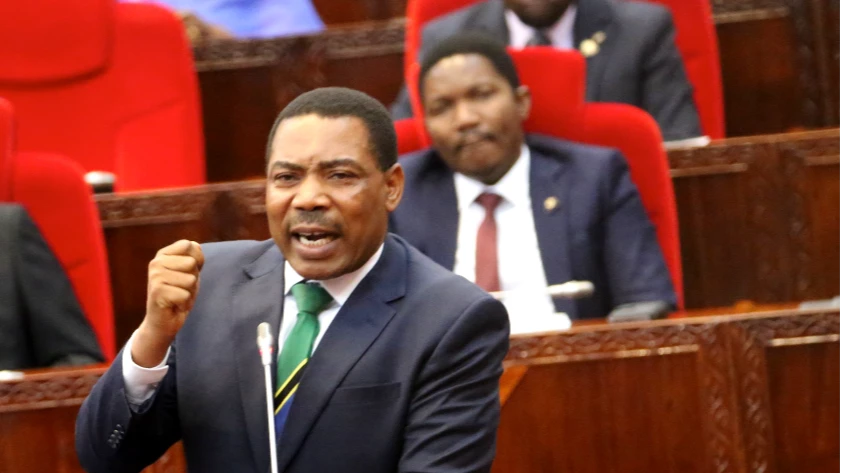
He called on the opposition to embrace dialogue and work together with the government to prevent similar incidents in the future. According to him, unity is the only way forward if Tanzania is to recover from the recent turmoil.
The decision to cancel the December 9 Independence Day celebrations also followed rising concerns over planned demonstrations, with some social media users calling for what they described as a ‘mother of all protests’ during the celebrations.
With tension already high, the government opted to prioritise stability and rebuilding instead of national festivities.

