


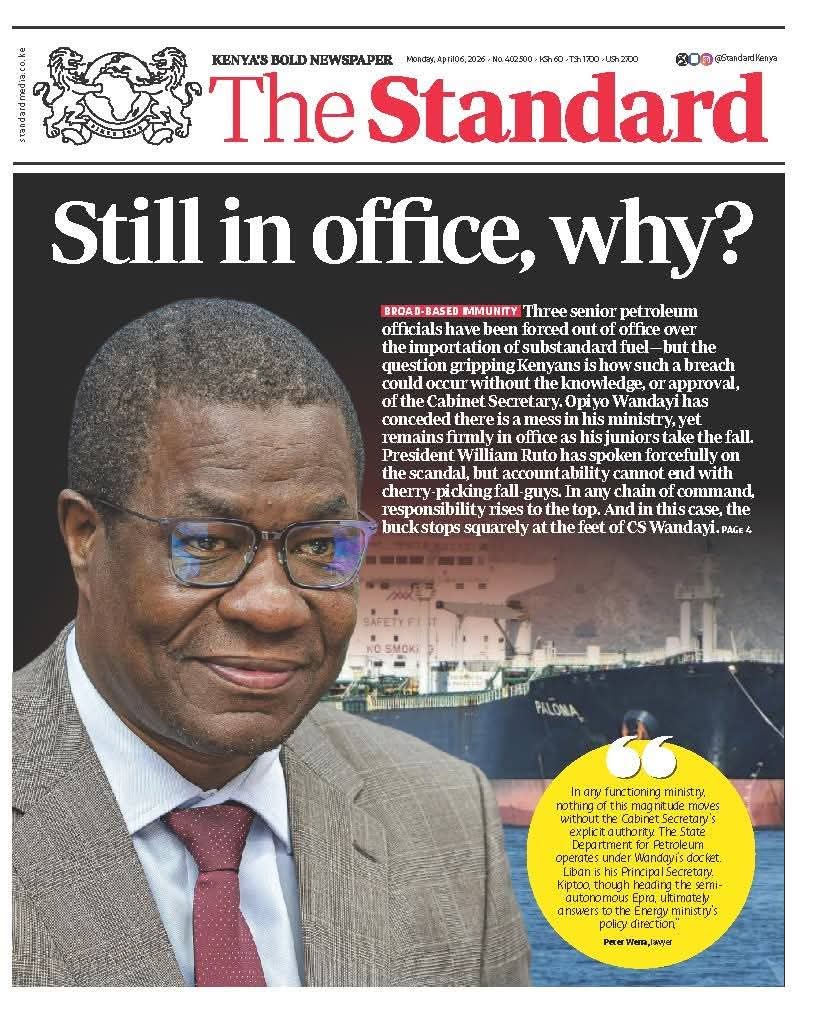
Opiyo Wandayi is the Cabinet Secretary for Energy and Petroleum in Kenya and is in charge of the ministry responsible for fuel supply, regulation, and policy. In recent days, a major issue has emerged within this sector following the arrest and resignation of several senior officials under his ministry.
These include Petroleum Principal Secretary Mohamed Liban, Kenya Pipeline Company Managing Director Joe Sang, and Energy and Petroleum Regulatory Authority Director General Daniel Kiptoo.
Early findings from the government suggest that fuel stock data may have been altered to create the impression of a shortage, which then led to the procurement of emergency fuel outside the usual government-to-government process.
The shipment in question involved about 68 million liters of fuel. Reports indicate that it was overpriced and of low quality, with estimated losses of about 2.9 billion shillings for one cargo.
A second similar shipment was stopped before it could reach the country after more details came to light. This sequence of events has raised serious concerns about how decisions were made and whether proper checks were followed.
Wandayi has addressed the matter publicly and assured Kenyans that fuel supply in the country remains stable.
He stated that the government acted quickly to prevent further losses by halting the second shipment. He also called for patience and asked the public to allow investigative agencies to complete their work without interference.
At the same time, he warned against what he described as disinformation from some political leaders, saying it could cause unnecessary panic.
Despite these assurances, many Kenyans remain concerned. There is growing public pressure on Wandayi to take responsibility since the issue occurred within institutions that fall under his ministry.
Critics argue that when senior officials are arrested and step down, accountability should not stop at lower levels. Some leaders, including Boni Khalwale, have openly called for Wandayi to resign or face further action, saying leadership must take responsibility for failures within its ranks.
Others have questioned whether the Cabinet Secretary was aware of the irregularities. If he was not aware, it raises concerns about supervision and oversight. If he knew, then questions about his role become even more serious.
This has created a difficult position for Wandayi, who must balance defending the ministry while also addressing growing public concern.
The situation has also affected public trust in the fuel sector. Fuel is a key part of everyday life in Kenya, affecting transport, business, and household costs. When there are signs of mismanagement, it quickly becomes a national concern.
Reports that stock levels may have been adjusted to justify emergency imports have made the situation worse, as they suggest possible manipulation within critical systems.
Wandayi has continued to emphasize that investigations are ongoing and that the government is committed to protecting public interest.
He has pointed out that action was taken once the issue became clear and that more officials are being questioned. William Ruto has also spoken about the matter and promised firm action against those found responsible.
A section of some Kenyans feel that the response has focused more on calming the situation rather than directly addressing the root problem. The arrests, resignations, and financial losses are already serious matters that require clear and direct accountability.

