


Silvanus Osoro, the Member of Parliament for South Mugirango, has come under heavy criticism after he posted and later deleted a tweet that many Kenyans have described as openly tribal and dangerous.
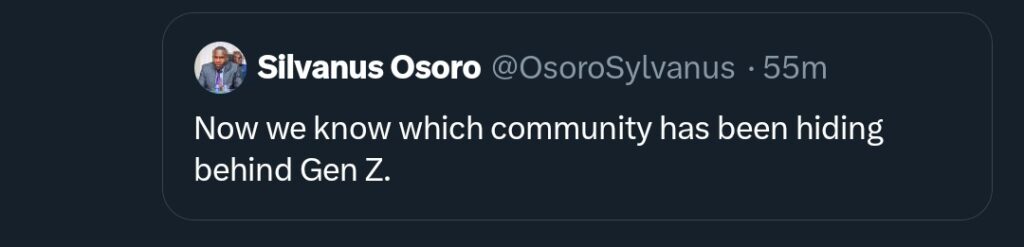
His statement, which read, “Now we know which community has been hiding behind Gen Z,” was interpreted as blaming a particular ethnic group for the recent rise in youth-led protests.
This kind of rhetoric has no place in a country that has already experienced the ugly face of tribal violence, especially the 2007 post-election chaos that left over a thousand people dead. It is shameful and reckless for a national leader like Osoro to play with such dangerous words in a country still healing from past wounds.
The tweet, which was quickly deleted after being shared, didn’t escape the public eye. Cyprian Nyakundi, a popular online figure, captured it and reposted it, triggering a strong wave of public backlash.
Many Kenyans expressed anger, warning that Osoro’s words were not only divisive but irresponsible. Some pointed out that leaders like him were the very reason the country often slips back into tribal politics. Instead of promoting unity and addressing the real issues affecting the youth, Osoro chose to stir hate and suspicion among communities.
What is most disappointing is that Osoro holds a senior position in Parliament, serving as Majority Whip. This role demands leadership and responsibility, not cheap tribal propaganda.
By making such a statement, Osoro has betrayed his position and abused his platform. Kenya is made up of more than 40 ethnic groups, and trying to single out one as being behind Gen Z’s activism is a clear attempt to shift attention from the genuine frustrations young people are expressing.
The youth are demanding accountability, fairness, and transparency not because they are being pushed by any tribe, but because they are tired of being ignored.
It is troubling that instead of addressing these demands, Osoro chose to throw in a tribal card. This speaks volumes about the kind of politics he believes in one based on division, fear, and scapegoating.
This is not the kind of leadership Kenya needs. The country is at a crucial moment where unity and understanding must be promoted, not destroyed.
For a politician who comes from a region that has also experienced political exclusion, Osoro should know better. He should be leading by example, building bridges across communities, and guiding the youth towards peaceful and constructive civic action.
The reaction on social media has been loud and clear. Kenyans from different backgrounds condemned the tweet, warning that this kind of language can lead to conflict.
References to the 2007 post-election violence were common, with many users warning that history could repeat itself if leaders like Osoro continue to promote tribal suspicion.
Others mocked him, with some saying his real fear was the growing unity among Kenyan youth, who are finally standing up against corruption and poor governance without being divided along tribal lines.
Osoro’s quick deletion of the tweet shows that he probably knew the weight of what he had said. But deleting a tweet does not erase its impact. The damage is done. Kenyans have seen his mindset and are rightly holding him to account.
It is a reminder that leaders must always think before they speak, especially when dealing with matters that touch on ethnicity.
Words have consequences, and in Kenya, tribal politics has always led to suffering.
In a time when young people are showing the courage to demand change and accountability, leaders should support them not target them with tribal accusations.
Osoro must take full responsibility for his words, apologize to the country, and reflect on the role he wants to play in shaping Kenya’s future.
Spreading tribalism is not only outdated it is dangerous. Kenyans have had enough of it. They want progress, justice, and peace, not leaders who drag the country backwards with careless and divisive talk.

