


The protests of June 2024 marked a turning point for the nation’s youth, with Generation Z leading the charge against issues such as high taxes, corruption, and poor governance.
These demonstrations not only captured national attention but also opened discussions about how different age groups perceive each other.
To explore these perceptions, Mwelekeo Insights, a research firm specializing in social, political, and economic trends, conducted a comprehensive study titled “Perception of Kenyans Aged 30 and Above Toward Gen Zs post-June 2024 Protests.”
The survey, carried out between March 1 and March 20, 2025, covered 16,800 respondents across all 47 counties in Kenya. Its goal was to highlight generational differences, shared values, and ways to foster social harmony.
The report reveals a mix of admiration and concern among older Kenyans regarding Gen Z’s activism.
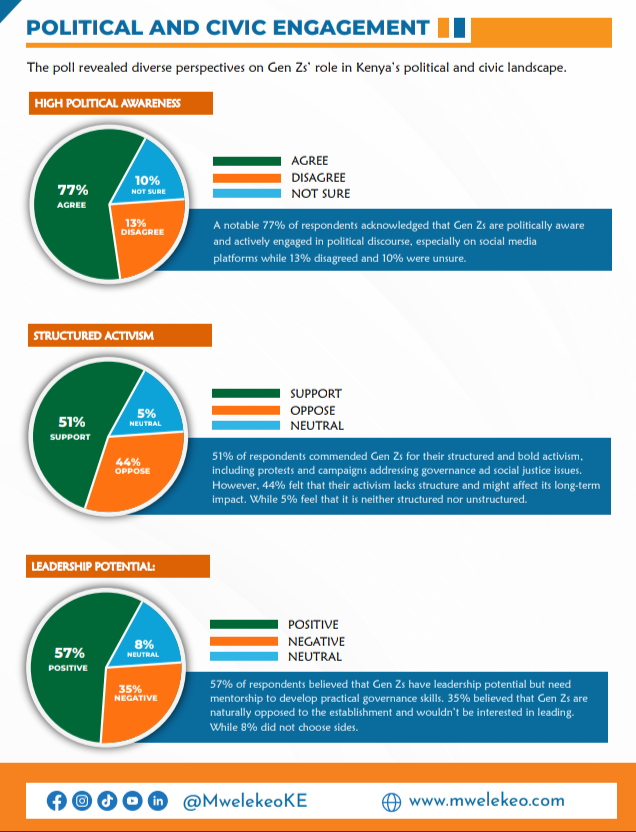
One particularly striking finding is how respondents viewed the structured and bold nature of youth-led protests.
According to the study, 51% of respondents aged 30 and above praised Gen Z for their organized approach to activism, which included both physical demonstrations and online campaigns for governance and social justice.
Digital platforms like X (formerly Twitter) and TikTok played a central role in these efforts, helping young people coordinate rapidly and spread messages widely.
While many older respondents saw this as a shift from traditional activism and a sign of innovation, 44% felt that Gen Z’s activism lacked sufficient structure, raising concerns about its long-term impact.
A small portion, 5%, considered it neither structured nor unstructured.
This split highlights both the admiration for the energy and reach of digital activism and the desire for mentorship to enhance its sustainability.Beyond activism, the study explored perceptions of leadership.
Around 57% of respondents believe Gen Z has strong leadership potential but would benefit from guidance to develop practical governance skills. In contrast, 35% think young people are naturally anti-establishment and uninterested in leading, while 8% remained neutral.

Regarding societal influence, opinions vary by location: 68% of urban respondents view Gen Z as a positive force for socio-economic and political change, while only 52% of rural respondents share this view.
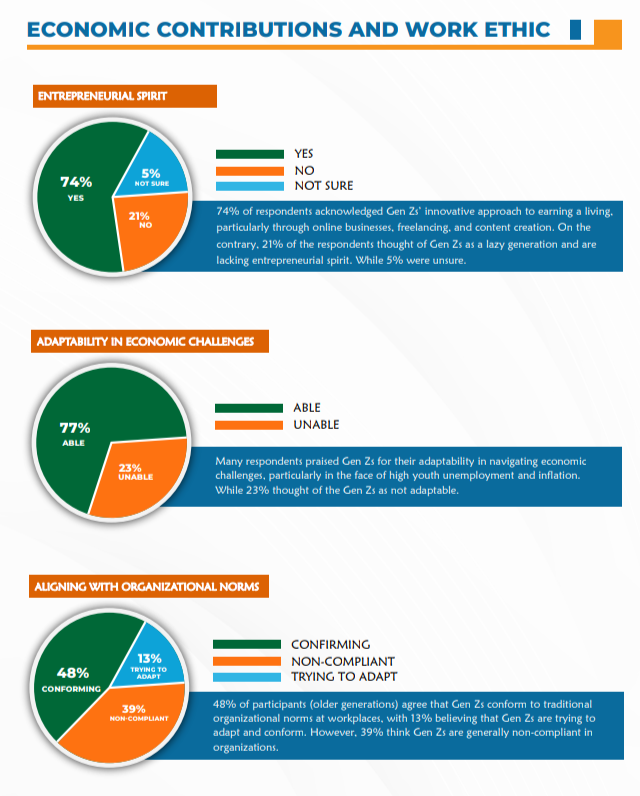
Mixed feelings were also noted concerning political engagement, with some admiring Gen Z’s courage to challenge norms and others concerned about their relative inexperience.
The Mwelekeo Insights report underscores the importance of intergenerational understanding.
By recognizing Gen Z’s contributions and channeling their energy with mentorship, older Kenyans could help create a more unified approach to addressing national challenges.
The firm has conducted several other studies, including examining attitudes toward bride price, fiscal policies, presidential cabinet appointments, and young women’s views on marriage, demonstrating its commitment to capturing diverse perspectives across Kenyan society.
You can visit the links provided above for full analysis, don’t forget to follow them on X @MwkeleoKe, Facebook @MwelekeoKe, and Instagram@MwelekeoKe.

