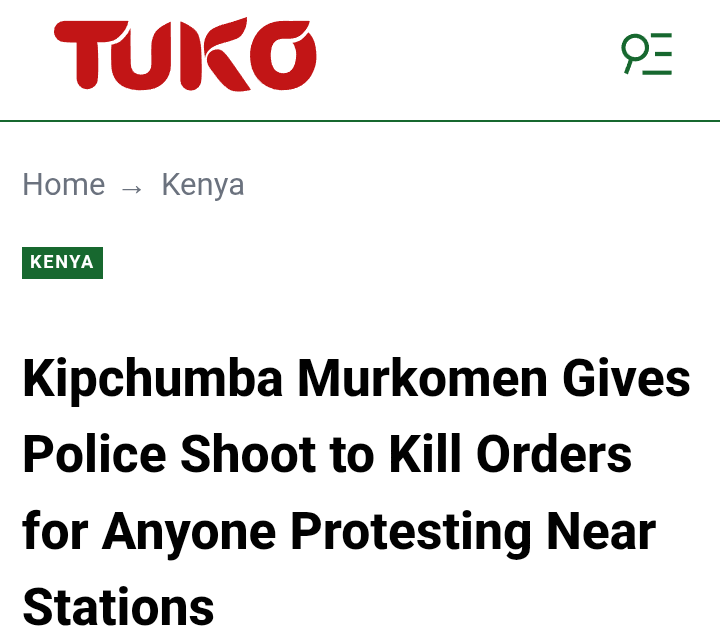


Interior Cabinet Secretary Kipchumba Murkomen has once again taken a dangerous and reckless approach in handling national matters, this time turning his frustration toward the media.
Instead of addressing the real issues behind the Gen Z-led protests that shook the country, Murkomen chose to blame media houses for doing their job broadcasting events as they happened. His remarks show not just poor leadership but a clear attempt to shift blame and control the narrative while ignoring the voices of thousands who took to the streets.
Murkomen’s comments at Harambee House were not just irresponsible, they were a threat to media freedom.
By accusing reporters of encouraging protests through live coverage, he ignored the fact that Kenyans were already angry and mobilized because of government excesses, corruption, and police brutality.
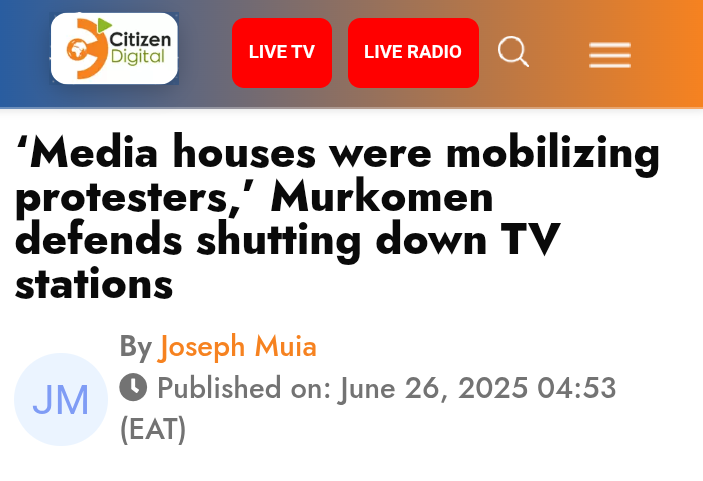
People did not need the media to tell them what to do they acted out of frustration and pain. Instead of recognizing that, Murkomen blamed journalists for simply reporting the truth. Claiming that media interviews and coverage were acts of incitement is not only dishonest but dangerous, especially coming from someone in charge of internal security.
It is alarming that Murkomen defended the disruption of live broadcasts during the protests, suggesting it was necessary for national security. This is a classic excuse used by governments that want to hide abuses and suppress public accountability.
He went as far as accusing some media houses of giving directions to protesters, trying to paint a picture of the media as a tool of unrest. But the reality is different.
The media showed Kenyans being tear-gassed, shot at, and beaten by security forces images that Murkomen would rather have hidden from the world.
He even targeted specific outlets like The Standard, accusing them of abandoning journalism. This was clearly personal. It seems Murkomen is more upset about headlines exposing the failures of this government than he is about young Kenyans being killed or injured during demonstrations.
Instead of answering tough questions, he wants to silence criticism and intimidate the press. That is not leadership. It is cowardice.
Worse still, Murkomen suggested that shutting down media stations could be an option in the future. This is a dangerous line to cross. The Constitution protects media freedom, yet here is the Cabinet Secretary in charge of internal affairs threatening to remove that freedom if it doesn’t serve the government’s interests.
It is clear that his interpretation of “national security” includes suppressing the truth.
What is most disturbing is that these remarks come shortly after Murkomen defended the so-called shoot-to-kill orders that have been blamed for the deaths of peaceful protesters. Instead of apologizing or showing remorse, he continues to double down, defending police actions and now turning his guns on the media.
This is not how a responsible leader behaves. While citizens are still mourning the loss of innocent lives, Murkomen is busy trying to find someone else to blame.
First, it was the protesters, then the opposition, and now the media. At no point has he accepted that the government mishandled the situation.
Kenya is not at war. The streets were filled with young people demanding justice, fairness, and accountability. Instead of listening, Murkomen responded with threats and censorship. His words and actions show a deep disregard for democracy.