


Zaheer Jhanda’s proposal to regulate influencers is one of the clearest signs of how far some politicians are willing to go to control freedom of speech in Kenya.
The Nyaribari Chache MP’s call to force content creators to hold degrees before speaking on professional topics is not about promoting truth or responsibility.
It is about silencing voices that challenge the political elite, controlling what people can say online, and turning Kenya into a censored society that mirrors the same oppressive systems he claims to admire in China.
By comparing Kenya to China, Jhanda exposes a dangerous mindset that ignores the core values of democracy and freedom. China is not a model of free expression; it is a tightly controlled state where dissent is crushed, journalists are jailed, and online content is heavily monitored by the government.
For Jhanda to borrow inspiration from such a system shows how disconnected he is from the struggles of ordinary Kenyans who rely on digital platforms to express themselves and expose corruption.
Instead of addressing unemployment, poverty, and the rising cost of living, the MP has chosen to go after influencers many of whom are young people using creativity to make a living.
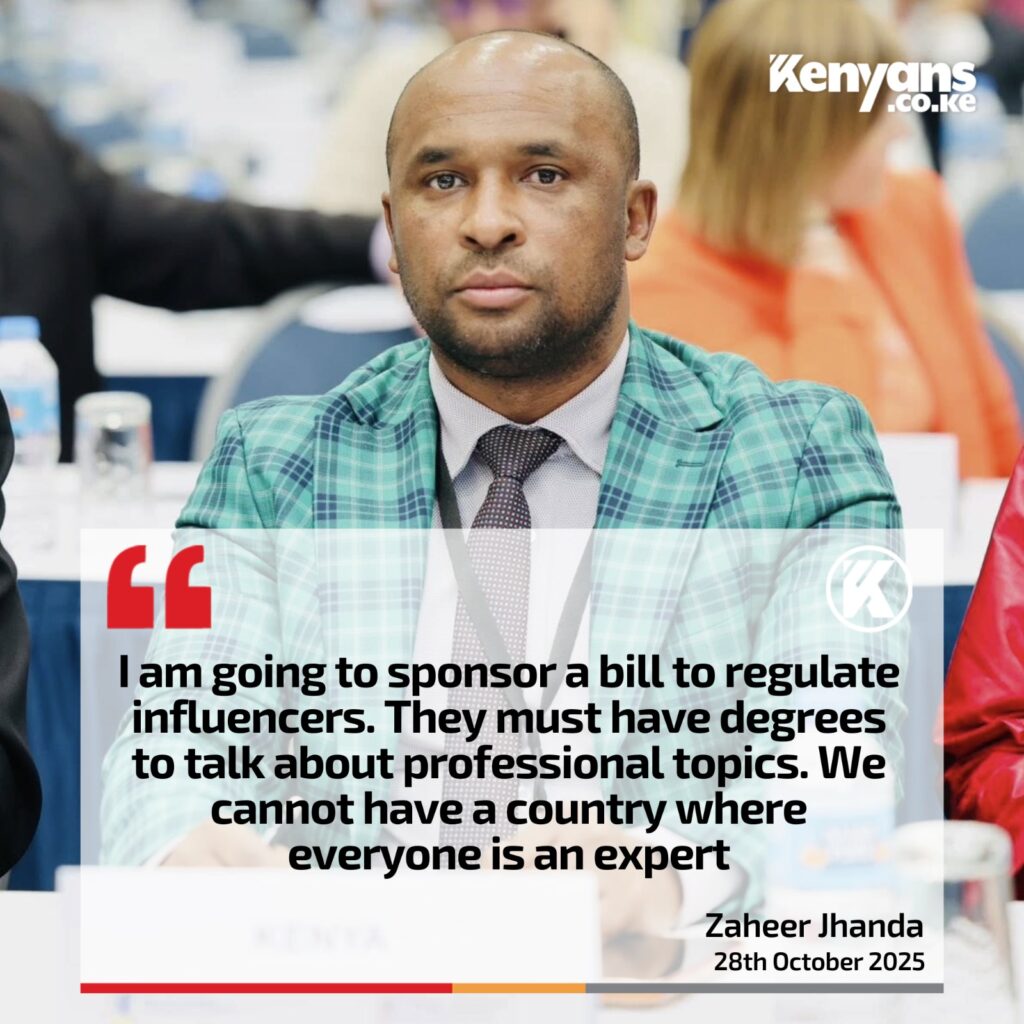
Jhanda’s argument that people must hold degrees to discuss professional issues is an insult to millions of Kenyans who cannot afford higher education but still contribute meaningfully to public conversations.
Kenya’s biggest social changes have often been driven by ordinary citizens with passion and courage, not titles or academic papers. Silencing them in the name of regulation is an attempt to control ideas and opinions, not misinformation.
If misinformation was really his concern, Jhanda would first start with politicians, who are often the biggest source of lies and propaganda in this country.
The truth is that Jhanda’s proposed bill is nothing more than a political weapon dressed up as reform. It targets online creators who have become too powerful and too vocal for the comfort of politicians. These influencers expose scandals, question government actions, and highlight injustices that the mainstream media sometimes avoids.
That is what this bill seeks to suppress truth that makes those in power uncomfortable.
Kenya fought hard for freedom of speech, and it cannot be surrendered to individuals who want to control the narrative under the excuse of professionalism. If Jhanda’s plan were to succeed, it would open the door for censorship, media intimidation, and the criminalization of opinion.
What starts as “regulation” would quickly become suppression, where only state-approved voices are allowed to speak.

