


A major investigation has exposed serious concerns about how a group of senior officials handled oil imports in Kenya, raising questions about transparency and accountability in the energy sector.
What initially appeared to be a routine fuel supply issue has now turned into a large corruption probe involving billions of shillings and some of the country’s most powerful figures.
The case revolves around a fuel shipment that entered the country under unclear circumstances. The vessel, known as MV Paloma, was not originally meant to dock in Kenya.
It was reportedly headed for Angola before it suddenly changed direction and arrived at the Port of Mombasa.
This unexpected move has become a key focus for investigators who believe the diversion was planned and coordinated.
Authorities say the shipment bypassed the government-to-government oil import system, which is designed to ensure fairness and proper pricing.
Instead of following the usual process, the fuel was offloaded and distributed locally between March 27 and March 29, 2026.
By the time questions were raised, the fuel had already entered circulation.
The investigation quickly escalated when officers from the Directorate of Criminal Investigations carried out coordinated raids on several homes. Four senior officials were arrested, including Daniel Kiptoo, Joe Sang, Mohamed Liban, and Joseph Wafula.
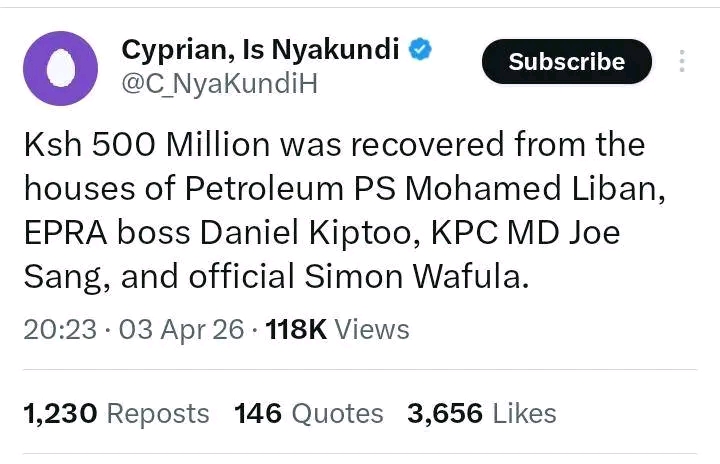
During the searches, detectives recovered more than Ksh100 million in cash, a discovery that pointed to possible personal gain linked to the deal.
Investigators believe the officials may have taken advantage of a temporary fuel shortage to push through the irregular import.
The shortage followed delays involving supplies linked to Emirates National Oil Company, which had been affected by disruptions in the Strait of Hormuz. This situation created pressure in the local market, which may have been used as a reason to approve an emergency shipment without proper checks.
Further findings suggest the fuel may have originally come from Saudi Aramco before being resold and redirected. Early estimates indicate the consignment was overpriced by billions of shillings, raising the risk of major losses to taxpayers.
Investigators are also looking into a possible second shipment that could have increased the financial impact even further.
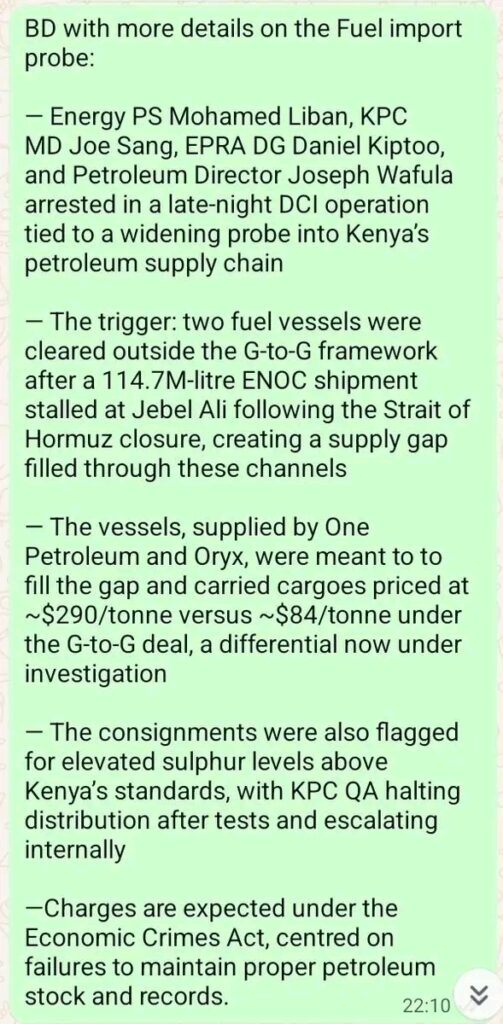
The issue came to light after concerns were raised about the quality of the fuel. A quality assurance officer at the Kenya Pipeline Company flagged high sulphur levels that did not meet national standards.
Despite resistance from some senior officials, the matter was reported and eventually reached investigators.
Authorities are now working to trace the flow of money and determine who approved the deal.
The case continues to develop as more details emerge, with many Kenyans watching closely and expecting clear answers on how such a situation was allowed to happen.

