


Kenya’s Jamhuri Week programme presents tourism as a serious national development tool rather than a seasonal activity. The structure of the week shows clear planning, with each day assigned a specific theme that connects conservation, investment, innovation, skills, and national branding.
The approach reflects a strategy to make tourism contribute directly to economic growth, job creation, environmental protection, and global positioning.
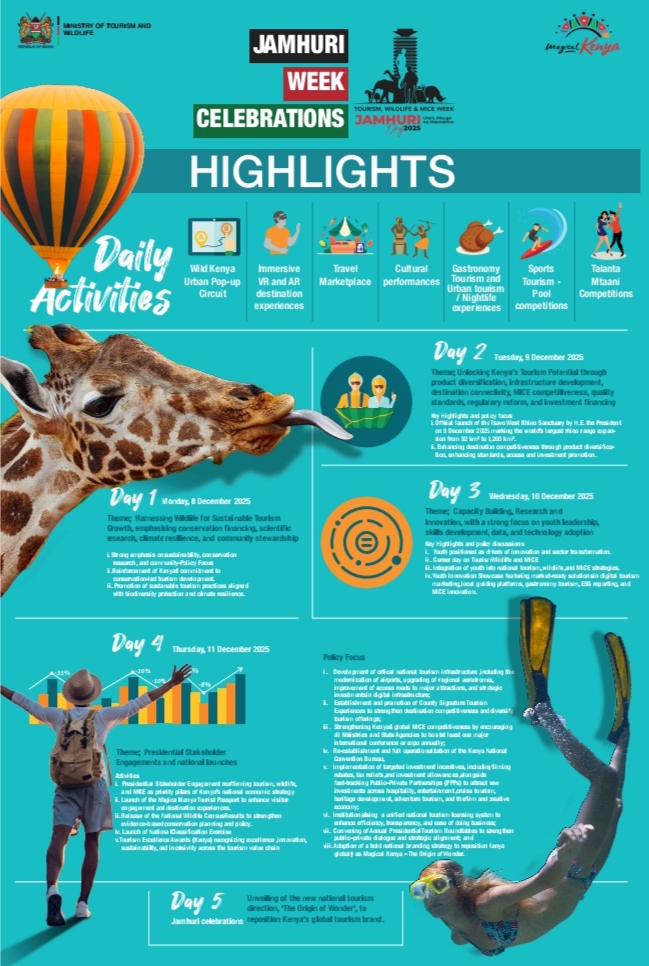
The daily activities are designed to bring tourism closer to both citizens and investors. Experiences such as urban wildlife pop up circuits, immersive virtual and augmented reality destinations, travel marketplaces, cultural performances, gastronomy tourism, nightlife experiences, sports tourism activities, and creative talent competitions show an effort to modernise how tourism is consumed.
This mix combines traditional attractions with technology, lifestyle, and youth driven activities, making tourism relevant to urban populations while still protecting Kenya’s natural heritage.
The first day focuses on wildlife as the foundation of sustainable tourism growth. Emphasis is placed on conservation financing, scientific research, climate resilience, and community stewardship.
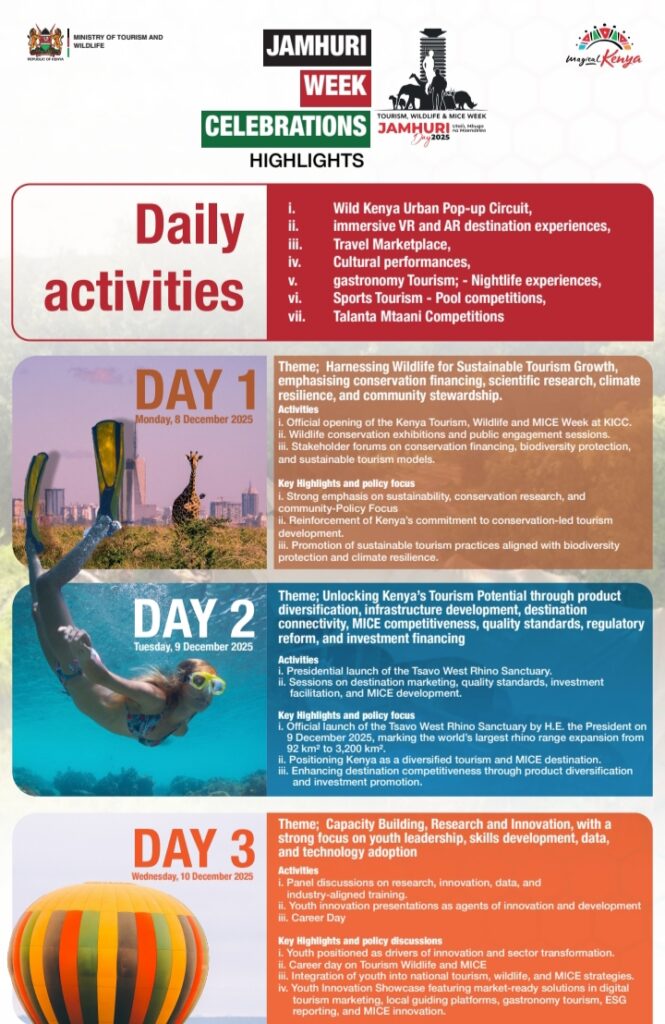
Stakeholder forums and public engagement sessions highlight the link between protecting biodiversity and maintaining tourism income.
The policy direction here is clear, conservation is not treated as a cost but as an investment that secures long term tourism value and livelihoods, especially for communities living near wildlife areas.
The second day shifts attention to unlocking tourism potential through diversification and infrastructure development.
Discussions on destination connectivity, quality standards, regulatory reform, and investment financing show that Kenya recognises infrastructure as a key barrier to growth.
The official launch of major conservation and tourism facilities reinforces the country’s intention to expand and improve destinations while maintaining global competitiveness.
Tourism is presented as a sector that must meet international standards to attract high value visitors and investors.
Capacity building and innovation take centre stage on the third day. The focus on research, data, digital skills, and technology adoption signals a move towards evidence based decision making.
Youth engagement is strongly highlighted through innovation showcases, career discussions, and training opportunities.
This reflects an understanding that the future of tourism depends on skills, creativity, and the ability to adapt to digital trends such as online marketing, data driven planning, and modern visitor services.
The fourth day brings policy and leadership into focus through high level stakeholder engagements and national launches. Tourism, wildlife, and meetings and events tourism are positioned as strategic pillars of the national economy.
The discussions emphasise infrastructure development, digital systems, county level tourism products, and global competitiveness.
The inclusion of awards and data driven conservation planning shows an effort to reward excellence while strengthening accountability and performance across the sector.
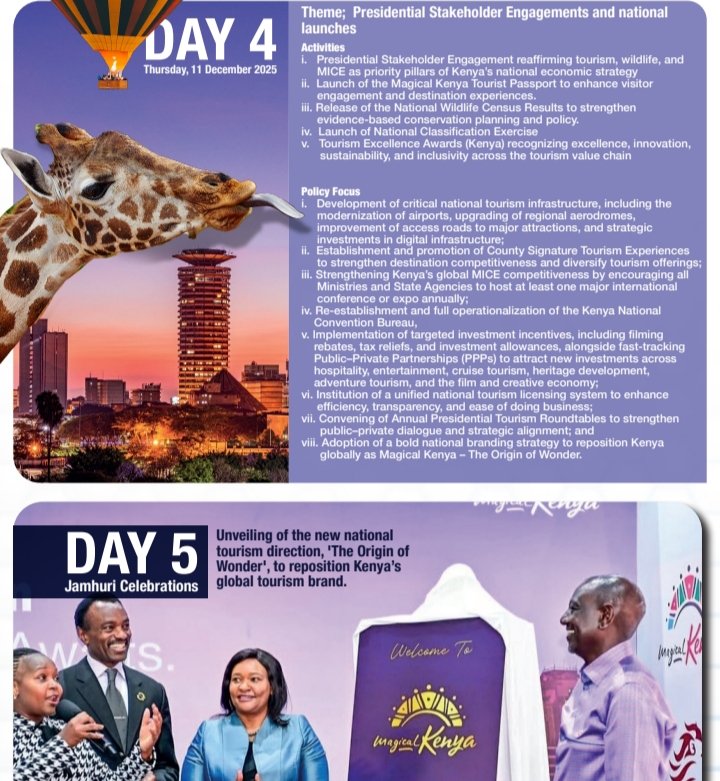
The final day concentrates on national branding and global repositioning. The unveiling of a refreshed tourism direction and identity reflects the importance of storytelling and perception in global tourism markets.
Kenya is presented as a diverse destination that combines nature, culture, innovation, and modern experiences under a unified brand narrative.
The programme demonstrates a coordinated effort to align tourism with national policy, investment priorities, youth development, and conservation goals. It shows a shift from isolated events to a connected agenda that treats tourism as a serious economic sector with long term impact.

