


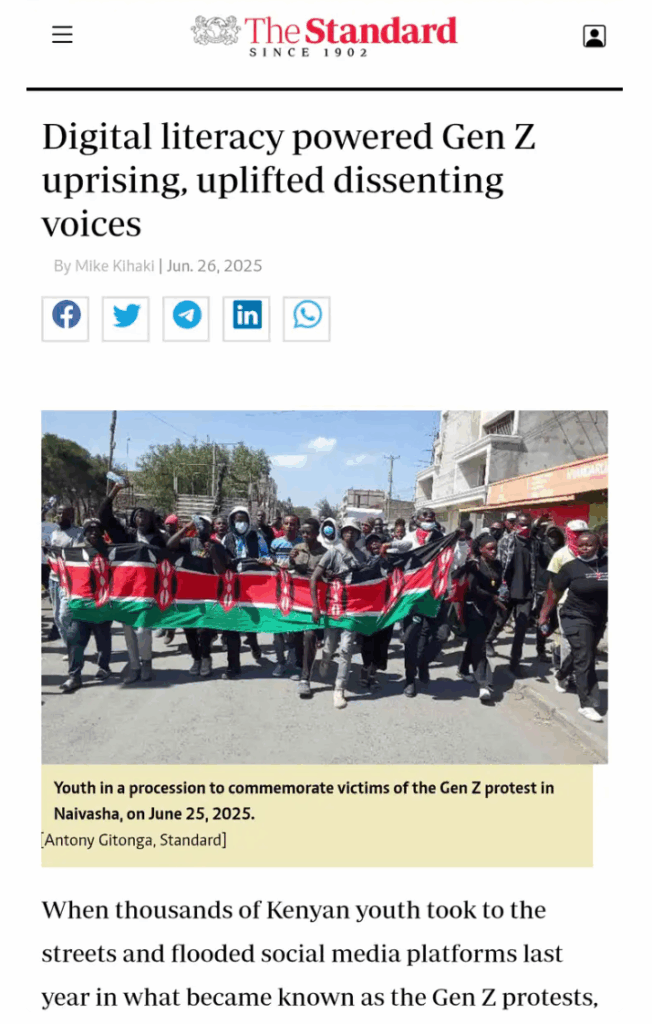
When thousands of young Kenyans filled the streets in 2024 to protest the Finance Bill, it was not just about being angry. It was about being informed. These protests, now remembered as the Gen Z protests, became one of the largest and most organized youth-led movements in Kenya’s history.
What made it different was not just how many showed up, but how smartly they planned and how effectively they used digital tools to make their voices heard.
The protest was not led by politicians or well-known activists. It was led by ordinary young people some still in high school, others in university, and many just starting out in their jobs.
They did not wait for instructions. Instead, they used apps like TikTok, Instagram, WhatsApp, and X (formerly Twitter) to guide each other. They made and shared posters, explained legal rights, and even offered emergency numbers.
Everything was organized online, and it moved fast. Many of these young people had never taken part in a protest before, but they knew how to use their phones. They used digital platforms to simplify complex ideas.
They explained what the Finance Bill meant in real life. They turned confusing government documents into simple graphics and short videos. They taught each other how to stay safe during protests, how to get legal help, and how to report abuse.
This was more than just using the internet it was digital literacy being used for social action. Not everyone could go to the streets. Some helped from home.
They corrected fake news, shared updates, and donated to support those on the ground. There were also people who helped connect arrested protesters with lawyers or paid for medical supplies. Each person played a part, whether big or small.
It was teamwork done through phones and data bundles. And it worked. Older Kenyans watched in surprise.
Many had never seen such a well-planned protest without political sponsors. For some, it was a shock to see young people take control without asking for permission.
For others, it was a moment of pride. It reminded them that Kenya’s youth are not just full of energy they are full of ideas and solutions too.
This movement proved something important. When young people have access to the internet, understand how to use it, and believe in a cause, they can do great things.
They can fight back against bad policies, they can educate others, they can lead change. The Gen Z protests were not just about rejecting a bill.
They were about saying, “We understand what’s going on, and we will not be silent.”
In the end, this moment showed that Kenya’s youth are no longer waiting for tomorrow. They are active today, and they are using knowledge, digital tools, and teamwork to shape the country.

