


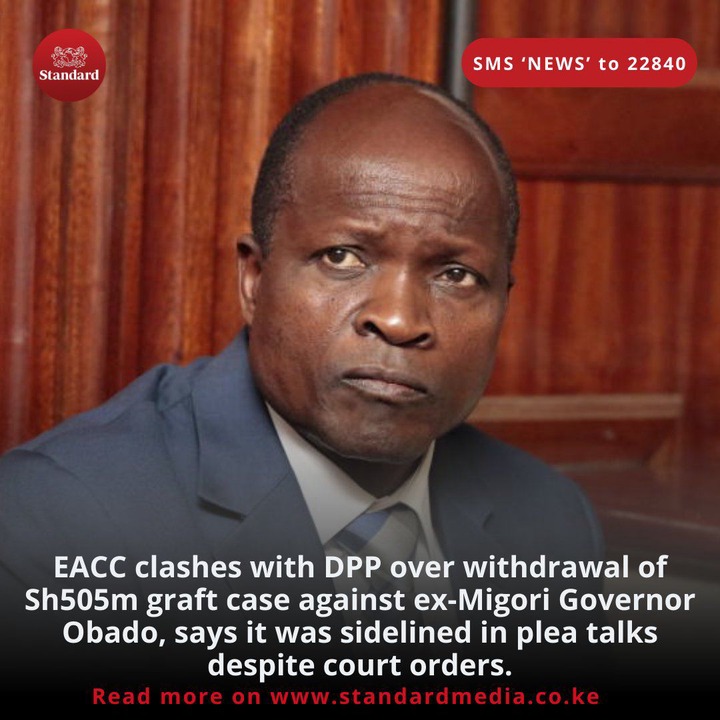
The decision by the Director of Public Prosecutions to drop the Ksh 505 million corruption case involving former Migori Governor Okoth Obado has opened a new wave of concern across the country.
The move has drawn sharp reactions not only from the public but also from the Ethics and Anti-Corruption Commission, which now says it was completely sidelined in discussions leading to the withdrawal. This has raised questions about how such a significant case could be handled without involving the agency that conducted the core investigations.
According to EACC, the High Court had earlier directed that it be part of all deliberations and decisions concerning the case, yet the talks leading to the withdrawal reportedly took place without its input. The commission had spent years investigating Obado over alleged mismanagement of county funds, theft of public resources, and misuse of public office when he served as Migori Governor.
These investigations had extended beyond paperwork and statements, eventually resulting in the seizure and auction of some of Obado’s assets.
Through this process, EACC said it was able to recover more than Ksh 73 million, which it described as wealth that could not be properly accounted for.
With the DPP now moving to withdraw the case, many Kenyans feel that the fight against corruption is taking steps backward. Public reactions online show wide frustration, with many people expressing fear that individuals accused of corruption continue to benefit from weak or inconsistent prosecution. A common view among social media users is that the DPP’s office has become the weakest link in the justice chain, often allowing high-profile cases to collapse before they reach meaningful conclusions.
For many citizens, this latest development appears to confirm those fears.
EACC has made it clear that it is not accepting the withdrawal quietly. The commission is demanding greater transparency around how the DPP reached the decision and is insisting that any move affecting a major corruption case must follow due process. It argues that decisions made without consultation undermine the wider national effort to discourage theft and misuse of public funds.

