


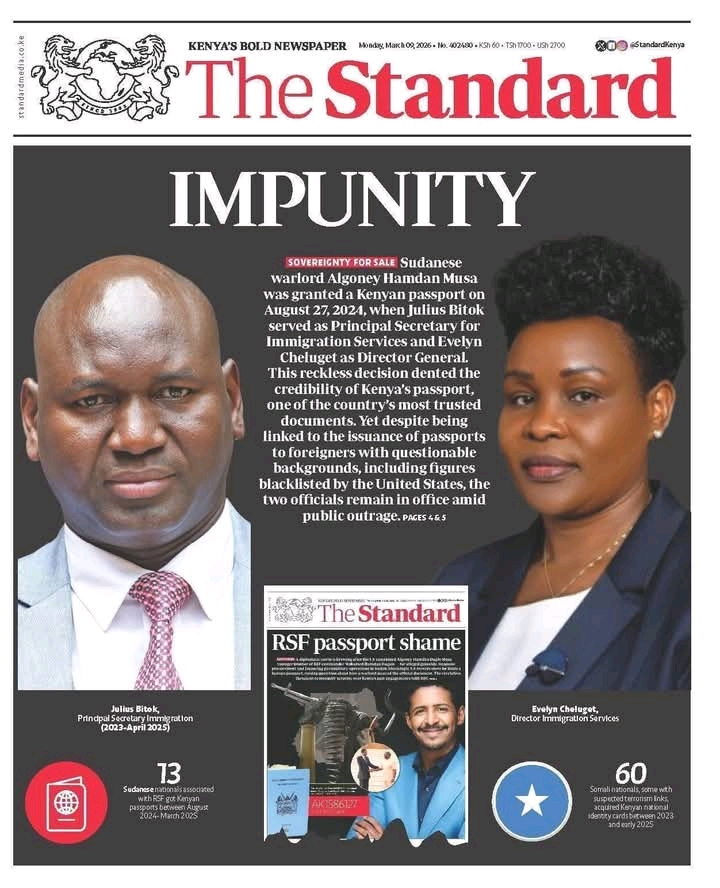
Serious questions are now being raised about how sensitive immigration systems are being managed after leaked documents linked senior officials to the issuance of Kenyan passports to controversial foreign figures.
The matter has drawn attention to the operations of the Directorate of Immigration Services and the integrity of the country’s identification systems.
According to the leaked information, a senior commander linked to Sudan’s paramilitary group, the Rapid Support Forces (RSF), reportedly obtained a Kenyan passport despite being under international sanctions.
The RSF has been involved in the ongoing conflict in Sudan, and the alleged issuance of travel documents to one of its commanders has raised security and diplomatic concerns.
Observers say the situation goes beyond a simple administrative mistake.
Critics believe it suggests that certain individuals within the system may have deliberately helped specific foreigners obtain travel documents quickly. If the claims are confirmed, it would mean that people associated with regional conflicts were able to gain travel access and financial mobility using Kenyan identity documents.
This issue has also angered many citizens who regularly complain about long delays when applying for passports.
While many Kenyans report waiting months due to shortages of passport booklets and equipment problems, the leaked documents suggest that some foreigners may have received faster processing.
The contrast has increased public frustration and raised questions about fairness and transparency within the immigration department.
Security analysts warn that if sanctioned individuals are using Kenyan passports, the documents could be used to bypass global financial restrictions.
This could damage the credibility of Kenyan travel documents and affect the country’s reputation internationally.
The diplomatic reaction has already started to emerge. Authorities in Khartoum have reportedly accused Kenya of interfering in the internal conflict by allowing individuals linked to the RSF to obtain travel documents.
Such accusations could complicate Kenya’s role as a regional peace mediator and weaken its position in diplomatic negotiations.
There are also economic concerns. Some analysts warn that tensions arising from the scandal could affect trade relations if the issue escalates.
In extreme cases, countries sometimes respond with trade restrictions or tighter controls on imports and exports.
Legal experts and civil society groups are now calling for accountability. They argue that issuing citizenship or travel documents to foreign individuals involved in armed conflicts may violate the Kenya Citizenship and Immigration Act, which requires thorough background checks before passports are issued.
So far, the Ministry of Interior and National Administration has not provided a detailed public response to the leaked documents. The lack of an official explanation has fueled public debate and increased calls for an independent investigation.International financial monitoring agencies are also paying attention.
The U.S. Department of the Treasury reportedly updated records connected to sanctioned RSF figures and included details linked to the Kenyan passport. Such developments could lead to increased monitoring of financial transactions connected to Kenya.
Experts warn that if the issue is not addressed quickly, the reputation of the Kenyan passport could suffer. Travelers from Kenya could face additional checks at airports and border crossings if authorities abroad begin to suspect misuse of the country’s identification documents.
Pressure is also mounting within the country. Members of the National Assembly of Kenya are being urged to summon immigration officials to explain how a sanctioned individual was able to receive a passport through a system that was supposed to have strict digital verification.
The outcome of the investigations could determine how the government handles accountability within key institutions. Many citizens are watching closely to see whether those responsible will face consequences or whether the matter will fade without clear action.
The decision could shape public trust in state institutions and the future credibility of Kenyan identification systems.

