


The rise of Prophet David Owour has become one of the most debated stories in Kenya’s religious space, raising serious questions about faith, power, and accountability.
His journey from a quiet life abroad to commanding huge crowds at home has attracted both admiration and deep concern, especially following recent claims that have drawn national attention.
Prophet Owour is the founder of the Ministry of Repentance and Holiness, a church that has grown rapidly over the years.
Supporters describe him as a powerful preacher who calls people to live holy lives, while critics see a man who uses fear and dramatic statements to control followers.
What is not in dispute is his wide influence and the loyalty he commands among his followers across the country and beyond.Before returning to Kenya, Owour is said to have worked in the United States as a researcher and scientist.
His supporters often point to this background as proof that he gave up a successful career to answer a divine calling. After coming back, he reportedly began preaching on the streets of Nakuru, focusing on repentance and warning of judgment.
Over time, his messages attracted growing crowds, and by 2004, his ministry had taken a more formal shape. From there, his influence spread fast, helped by large gatherings, strict teachings, and strong media attention.
However, his rise has not been free of controversy. Prophet Owour has made several statements over the years that shocked many Kenyans. One of the most talked about claims was when he was quoted saying that he brought the COVID-19 virus to punish sinners.
This statement caused anger and fear, especially at a time when the world was already suffering from loss of life, economic hardship, and confusion.
Health experts and religious leaders questioned such remarks, warning that they could mislead the public and cause harm.
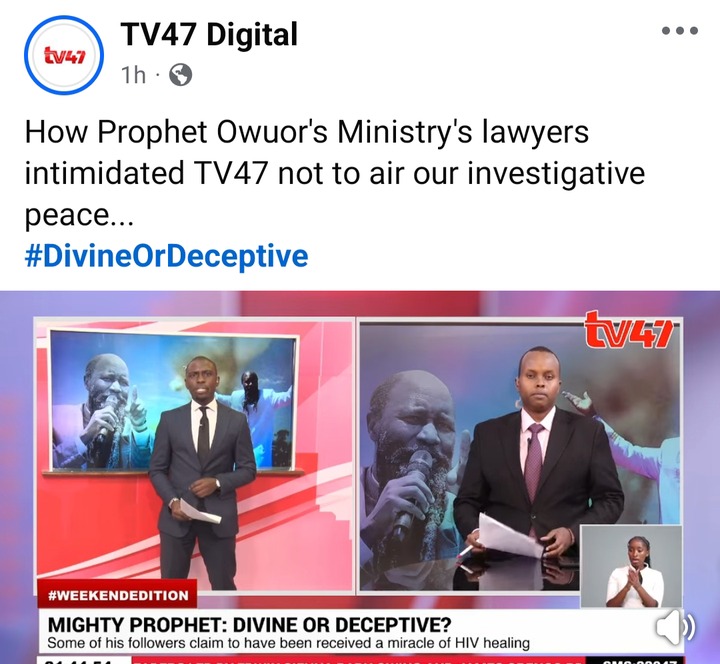
The latest controversy has pushed the debate even further. Prophet Owour recently claimed that he had cured several people of HIV and AIDS through prayer. Such claims touch on a very sensitive issue, as HIV remains a major public health challenge in Kenya.
Medical professionals have repeatedly stated that there is no cure for HIV, only treatment that helps people live longer and healthier lives. Any claim of a cure therefore demands careful examination.
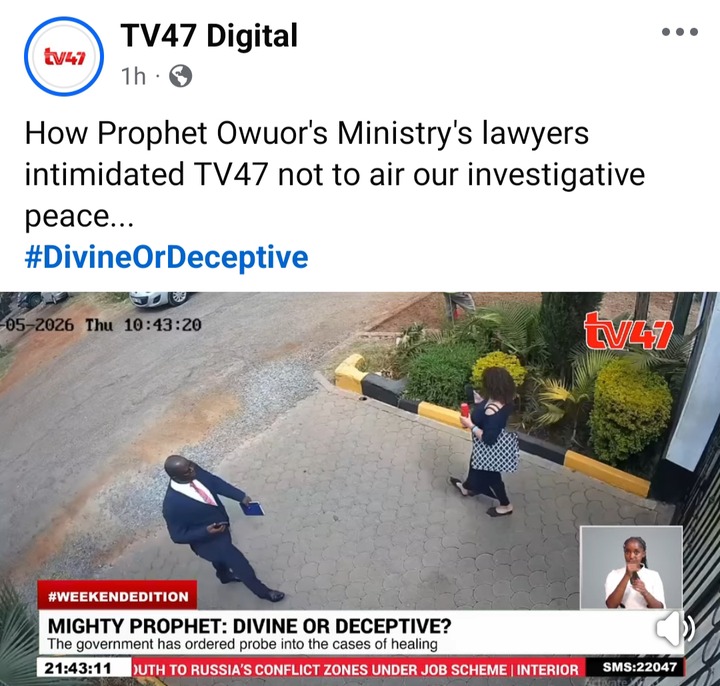
TV47, a local media house, decided to investigate these claims in search of clarity.
According to the station, their reporters sought answers and evidence to support the statements being made.
Instead of open engagement, the station reported that Prophet Owour sent three lawyers who allegedly intimidated the journalists and threatened legal action if the investigation continued.
This move raised further concern about transparency and the right of the media to ask tough questions in the public interest.
The incident has sparked a wider conversation about the limits of religious freedom and the responsibility that comes with influence. While faith plays a major role in the lives of many Kenyans, critics argue that religious leaders must be held to account when their claims affect public health and safety.
Supporters of Prophet Owour continue to defend him, saying he is being targeted unfairly. Others believe that silence and intimidation only deepen suspicion.
The power held by influential religious figures must be balanced with truth, responsibility, and respect for the law. Faith should inspire hope, not fear, and leadership should welcome questions, not silence them.

