


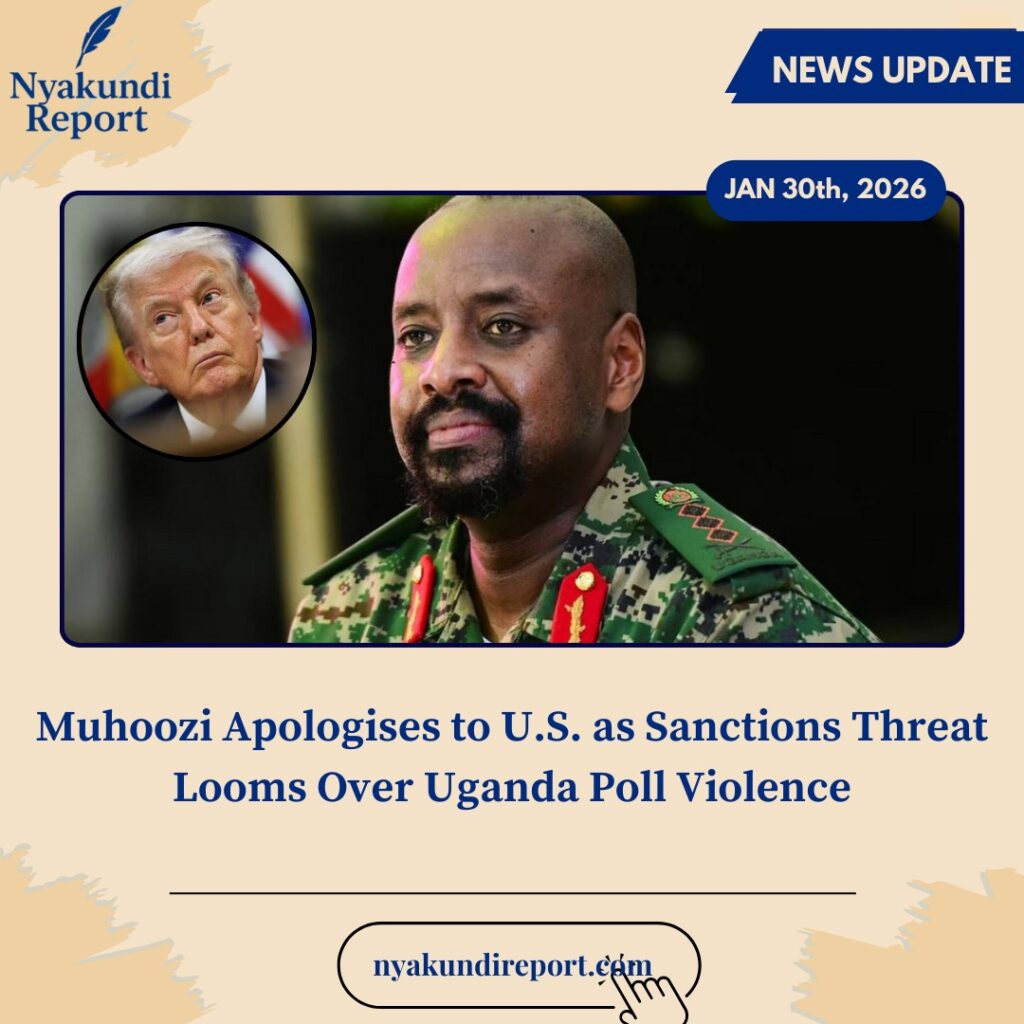
Ugandan Chief of Defence Forces General Muhoozi Kainerugaba has apologised to the United States following international backlash and threats of sanctions over alleged human rights violations during Uganda’s disputed 2026 general elections, which drew sharp criticism from Western leaders.
In a statement released on Friday, January 30, Muhoozi said he had deleted earlier social media posts, admitting he had been misinformed, and expressed regret for remarks that strained relations between Uganda and key international partners.
“I want to apologise to our great friends, the United States,” Muhoozi said, confirming he had spoken with the US Ambassador and that military cooperation between Kampala and Washington would continue as usual despite the recent diplomatic tensions.
The apology followed mounting pressure after US Senator Jim Risch called for sanctions against Muhoozi, citing reports of extreme election-related violence and Uganda’s worsening human rights record during the January polls.
Uganda’s Ambassador to the United States, Adonia Ayebare, intervened to defuse the escalating standoff, later confirming that the matter had been resolved and reaffirming that relations with Washington remain a top foreign policy priority.
Senator Risch urged President Donald Trump to reassess security ties with Uganda, warning that continued cooperation would be untenable amid allegations of brutality, repression, and democratic backsliding under President Yoweri Museveni’s government.
The situation worsened after opposition leader Bobi Wine reported that masked soldiers raided his home and assaulted members of his family, intensifying international concern over post-election violence and political intimidation.
President Museveni was declared the winner of the elections with 7.9 million votes, securing a seventh term, while Bobi Wine garnered 2.7 million votes, disputing the results and alleging widespread malpractice and voter suppression.
The elections were marked by mass arrests, an internet shutdown, and failures of biometric voter kits, forcing a manual voting process that critics argue enabled large-scale ballot manipulation and undermined the credibility of the final outcome.

