


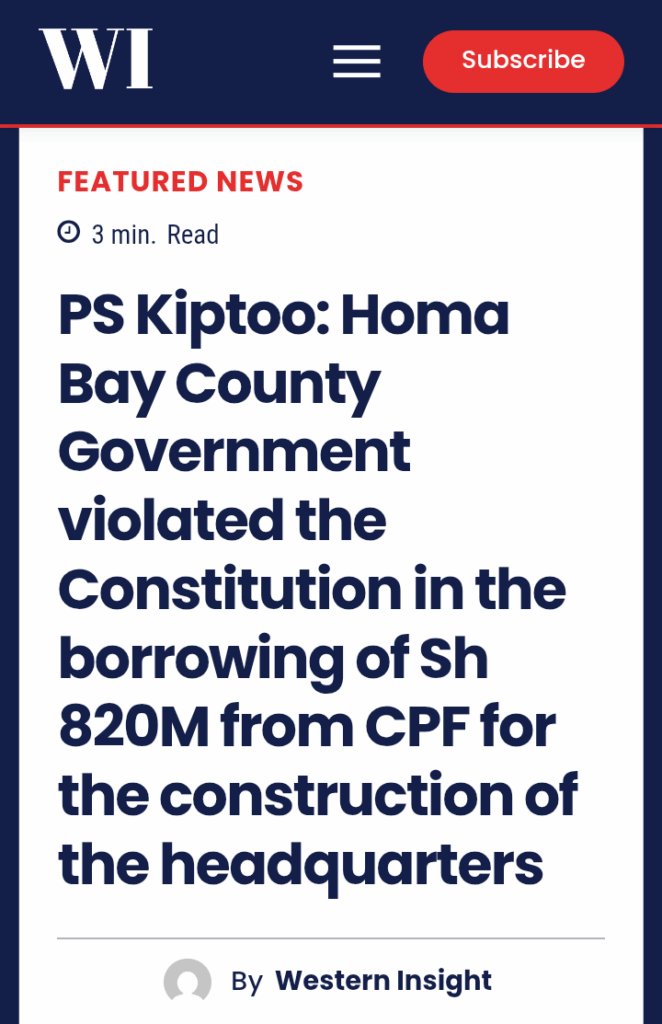
Homa Bay County, led by Governor Gladys Wanga, is facing serious questions over how it secured a Sh 820 million mortgage loan for building the county headquarters.
The way this loan was obtained shows clear violations of the Constitution of Kenya, putting the governor and her administration under intense scrutiny.
The loan was taken from the County Pension Fund (CPF) without the national government’s guarantee, which is required by law.
Dr Chris K. Kiptoo, Principal Secretary for the National Treasury, confirmed that the national government did not issue any guarantee for this Sh 820 million loan.
According to Article 212(a) and 213 of the Constitution, county governments cannot borrow money unless the national government first guarantees the loan.
This is a key check meant to prevent counties from borrowing recklessly or without oversight.
Furthermore, the county assembly must approve any borrowing by the county government, but reports suggest that this did not happen properly in Homa Bay.
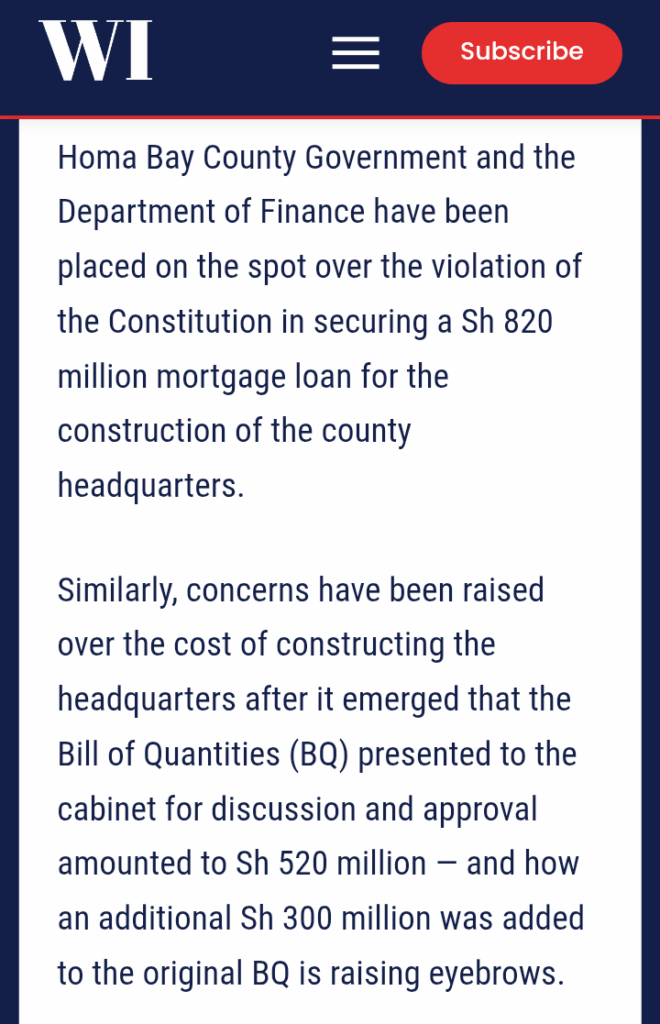
Inside sources say the original Bill of Quantities (BQ) for the headquarters project was Sh 520 million, but the loan amount shot up to Sh 820 million without any clear explanation or formal approval for the additional Sh 300 million.
The assembly is said to have approved only Sh 280 million initially, and no fresh approval was sought for the increase, violating procurement regulations that require any cost variation above 25 percent to be approved.
This raises serious questions about Governor Gladys Wanga’s leadership and the role of her Finance Department in managing public funds.
Assembly members have voiced their frustration, demanding that the Ethics and Anti-Corruption Commission (EACC) investigate the county government and assembly officials for possible corruption and abuse of office.
They accuse the county leadership of ignoring legal procedures and risking taxpayers’ money. Efforts to get a comment from the County Executive Committee (CEC) for Finance, Solomon Obiero, were unsuccessful, as he did not respond to queries on the matter.
Under Gladys Wanga’s watch, the county appears to be disregarding constitutional financial rules and transparency, which harms public trust and good governance.
It is important that this case is fully investigated and that those responsible are held accountable. Failure to do so could deepen mistrust in the county government and set a dangerous precedent for financial mismanagement.
The people of Homa Bay deserve better leadership that respects the law and protects their resources.

