


The family of Julia Njoki Wangui, a 24-year-old mother who died while in custody, is demanding answers after rejecting the government’s autopsy report.
The report, released after a postmortem on July 15, claimed that Julia died from a ruptured blood vessel in the brain, calling it a natural death.
But the family and several rights groups believe this explanation does not make sense. The report showed no signs of head injuries or any visible trauma, which raised suspicions and led the family to question how a healthy young woman could die just days after being locked up.
Julia was arrested on July 7 in Nanyuki during the Saba Saba protests. She was taken to court and remanded at Nanyuki Women’s Prison because she couldn’t raise the KSh 50,000 bond set by the court.
While in prison, she reportedly began complaining of headaches and feeling dizzy.
She was then moved to Nanyuki Teaching and Referral Hospital and later to Cottage Hospital where she was admitted to the ICU. She died there under unclear circumstances, and even the actual date of her death is now being disputed, with conflicting reports saying it was either July 10 or July 12.
During the postmortem, pathologists confirmed internal bleeding in the brain but also found unusual changes in her lungs, liver, and pancreas.
Because of this, they said more tests such as toxicology and histology were needed to understand what really happened. But Julia’s family says these findings are not convincing.
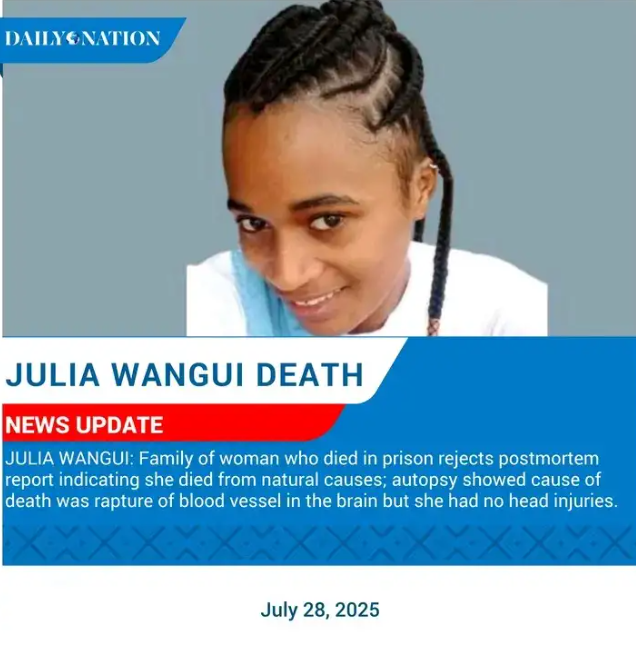
One of her relatives voiced deep frustration, saying she was fine when she went to prison and now they are being told she died from an issue in her brain with no sign of injury.
The family believes that the prison is hiding something and wants the truth to come out.
So far, the Kenya Prisons Service has not made any public statement, and their silence is making the situation worse. Human rights groups and local activists are calling for a full and independent investigation.
They want the government to release all medical records and allow access to CCTV footage from the prison and the hospitals. There are growing demands for justice, and the public wants accountability.
What happened to Julia should not be brushed aside as just another case. Her death, especially under state custody, raises many questions, and only a thorough investigation can reveal the truth. The family is not giving up, and neither are the activists who are standing by them.

