


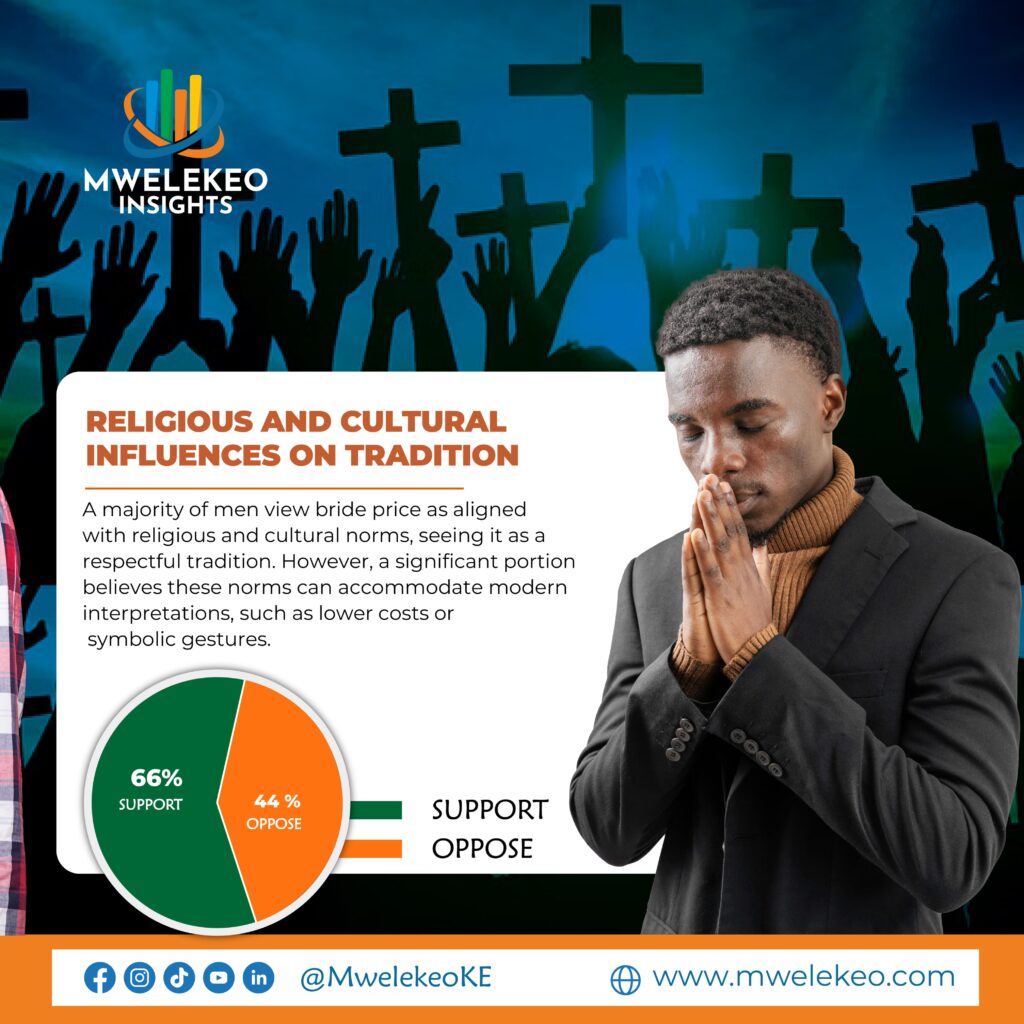
A recent study by Mwelekeo Insights has revealed that religion still plays a major role in how Kenyan men view the bride price tradition.
According to the findings, a majority of men see bride price as a respectful tradition that aligns with their religious beliefs, especially among Christians. Many believe that paying bride price is part of marriage rites and a way to honour families, making it hard to abandon.
However, the study also shows that some men, especially those with progressive religious views, support adapting the tradition to better fit today’s realities, like allowing symbolic or lower payments instead of expensive demands.
The study, which looked at the views of Kenyan men aged 18 to 45, shows that 53% still support the bride price tradition while 47% oppose it.
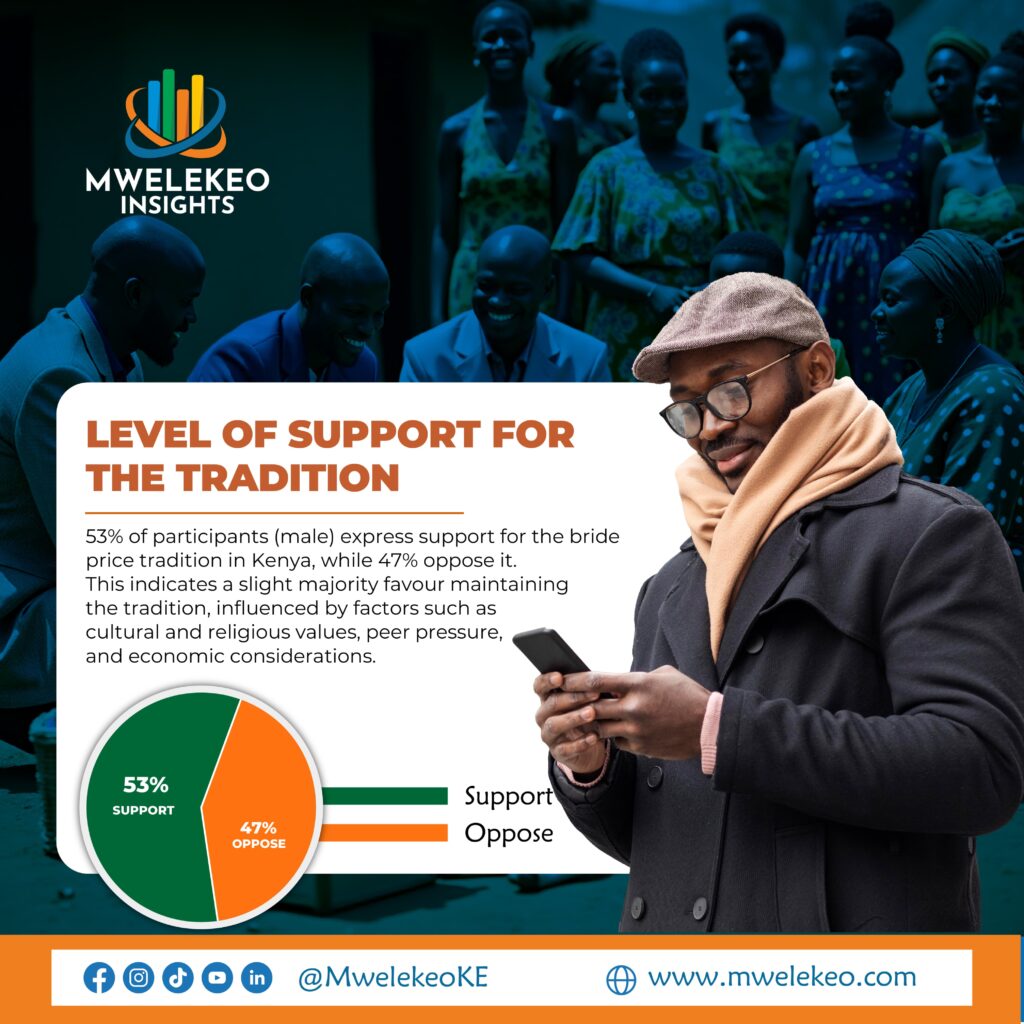
Support is highest among older men and those living in rural areas, while opposition is stronger among younger and urban men. Religion and culture were key reasons why many supported the tradition.
They view it as a way to unite families, show respect, and uphold community values. Some Christian teachings also encourage bride price as a show of commitment. On the other hand, exposure to global views and education makes some men question whether the practice is still relevant or whether it promotes gender inequality.
Economic pressure is another reason some men want change. The study found that 54% of men agree that bride price is financially burdensome, especially for young men who lack stable incomes. Many struggle to meet the high demands placed by some families, which include cash, livestock, and other gifts.

This financial burden has delayed marriages, with 68% of married men admitting that bride price affected their decision to marry.
Among unmarried men, 42% said it discouraged them from marrying due to the pressure to save up or borrow money just to meet the bride price expectations.
When it comes to emotional and social impact, 58% of men said that the bride price expectation affects their emotional well-being, often leading to stress.
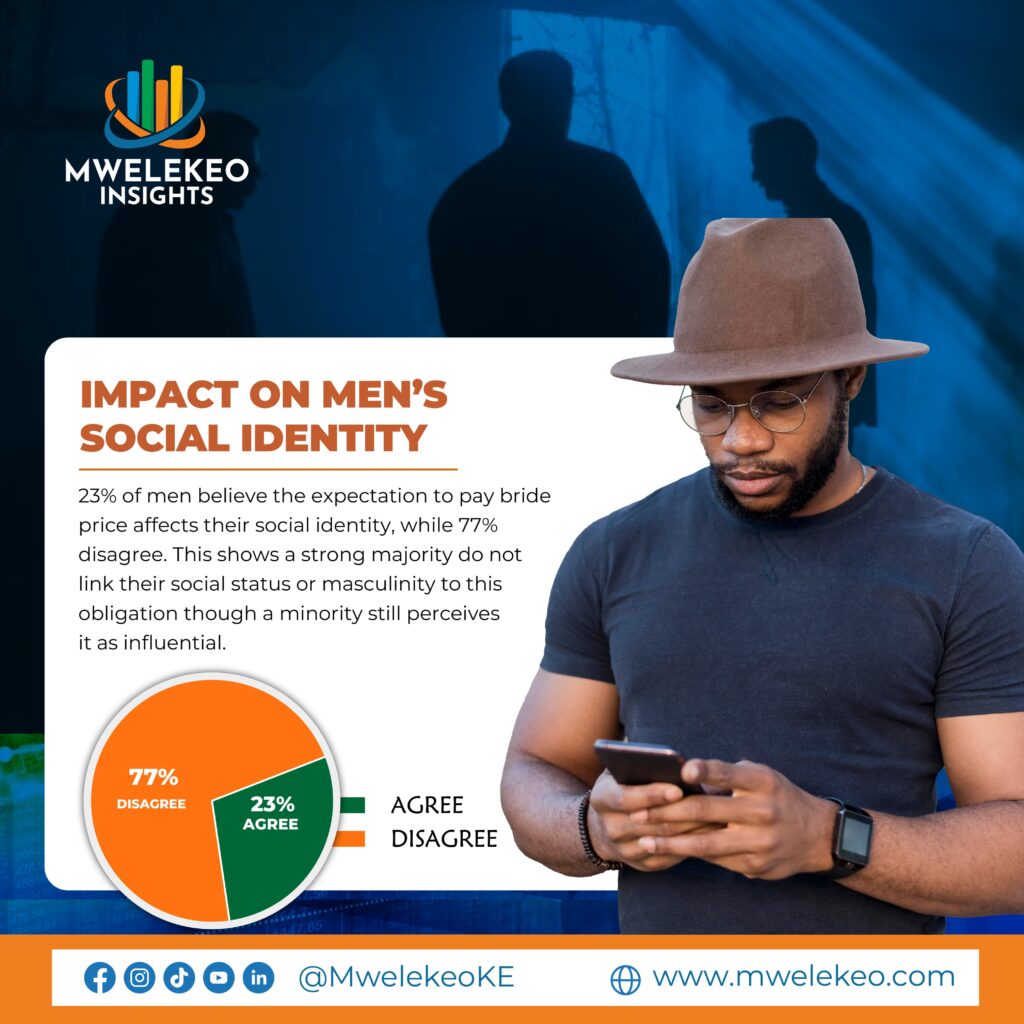
However, 77% said it does not affect their social identity, meaning most do not tie their masculinity to whether or not they can pay bride price. Still, the pressure from family and society to pay bride price remains strong, and failure to do so is often seen as a sign of weakness or unpreparedness.
The study also explored the connection between bride price and women’s autonomy. A large portion of men, especially those who are urban, educated, and exposed to modern gender discussions, feel that bride price commodifies women.
About 65% of respondents agreed that the practice makes it look like women are being bought, which goes against modern values of equality and fairness. However, others view it as a respectful gesture and not something that takes away women’s freedom.

Many men in the study said they don’t want to scrap the bride price tradition entirely but would like to see changes.
For example, 65% support cost-sharing between the man and the woman.

Another 89% support gradual payment over time, rather than paying everything at once.

A large 89% support the idea of treating bride price as a reward for good behaviour in marriage, rather than a condition to get married.
Only 29% support the idea of women paying bride price, showing most men still prefer to keep the tradition in its current male-led form.

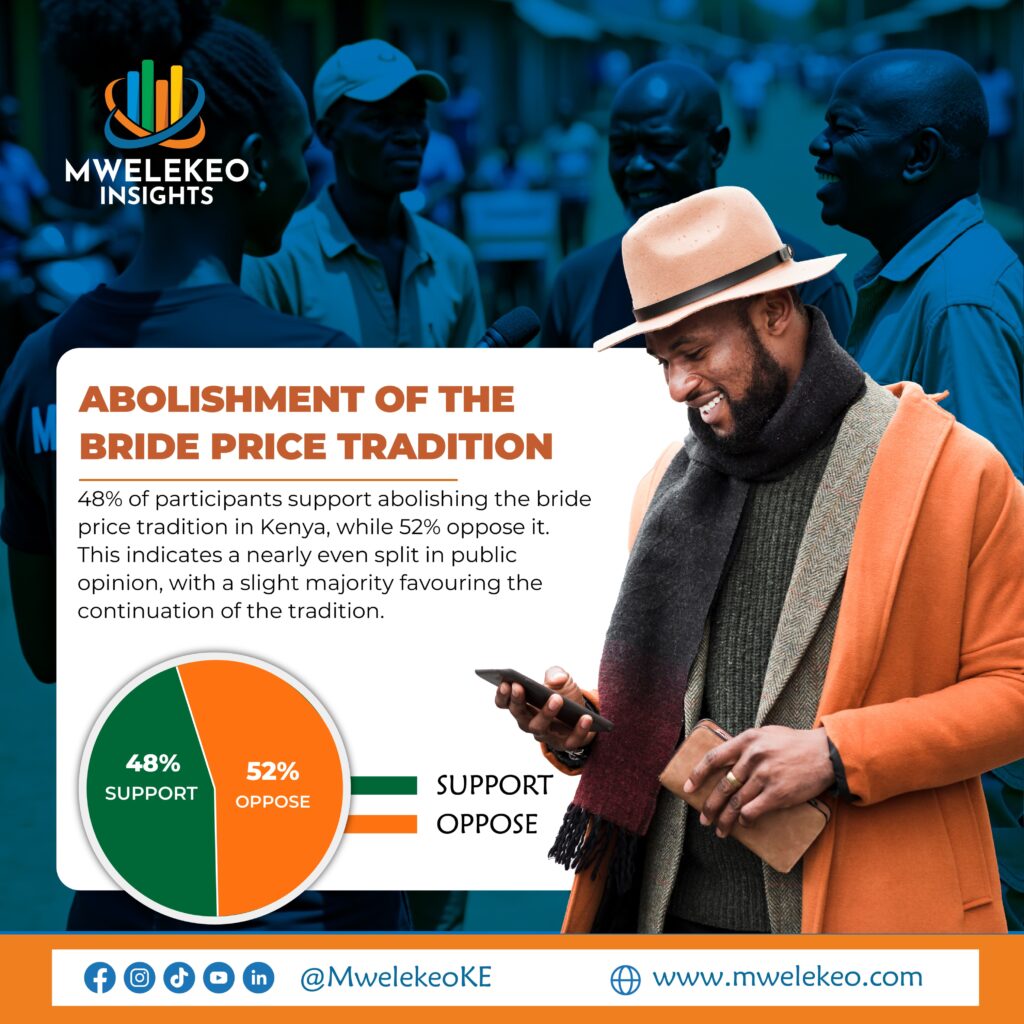
Even so, 48% of men support abolishing bride price altogether, indicating that views are shifting and the nation is almost split on whether to keep the tradition or not.
The research concluded that religion still has a strong influence on how men approach bride price, but so do education, income, location, and age.
While older and rural men defend the tradition, younger and urban men are calling for reforms.
Most agree that the time has come to rethink how bride price is practised in Kenya, not to discard it, but to make it fairer, more affordable, and more respectful to both men and women.

