


Kenyan men now suggest a radical transformation of the bride-price, with a staggering majority vouching for a *”Lipa Mdogo Mdogo”* approach when it comes to the fulfilment of the cultural bride price, a tradition as old as time that now faces radical shifts in contemporary Kenya.
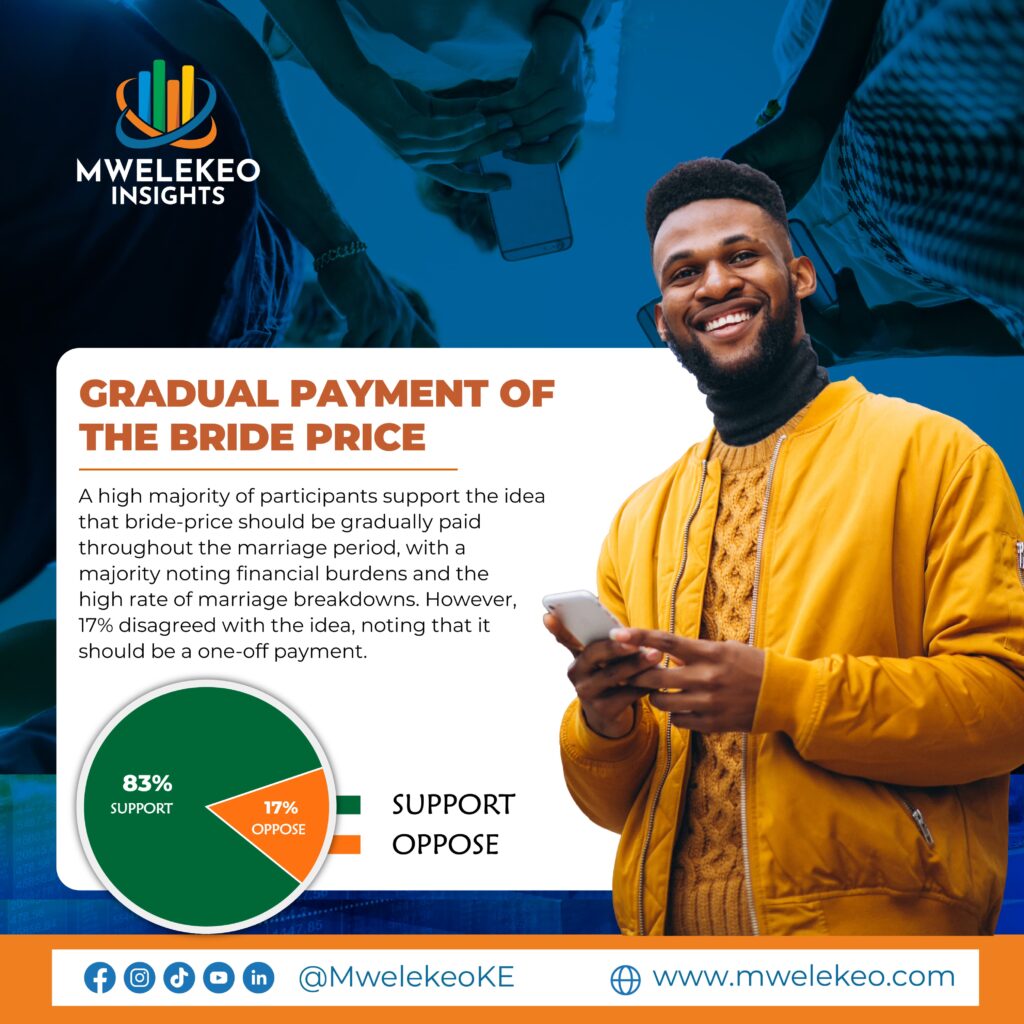
According to a new study by research firm Mwelekeo Insights, 83% of men are in support of the idea to have bride price payments staggered while only 17% oppose the move, insisting that bride price should remain a one-off payment to the bride’s family.
The study that focused on Kenyan men aged 18 to 45 also revealed growing divisions on the bride price tradition across various thematic areas.
While 53% of respondents expressed general support for the practice, 47% oppose it, citing the need for change and new realities associated with marriage.
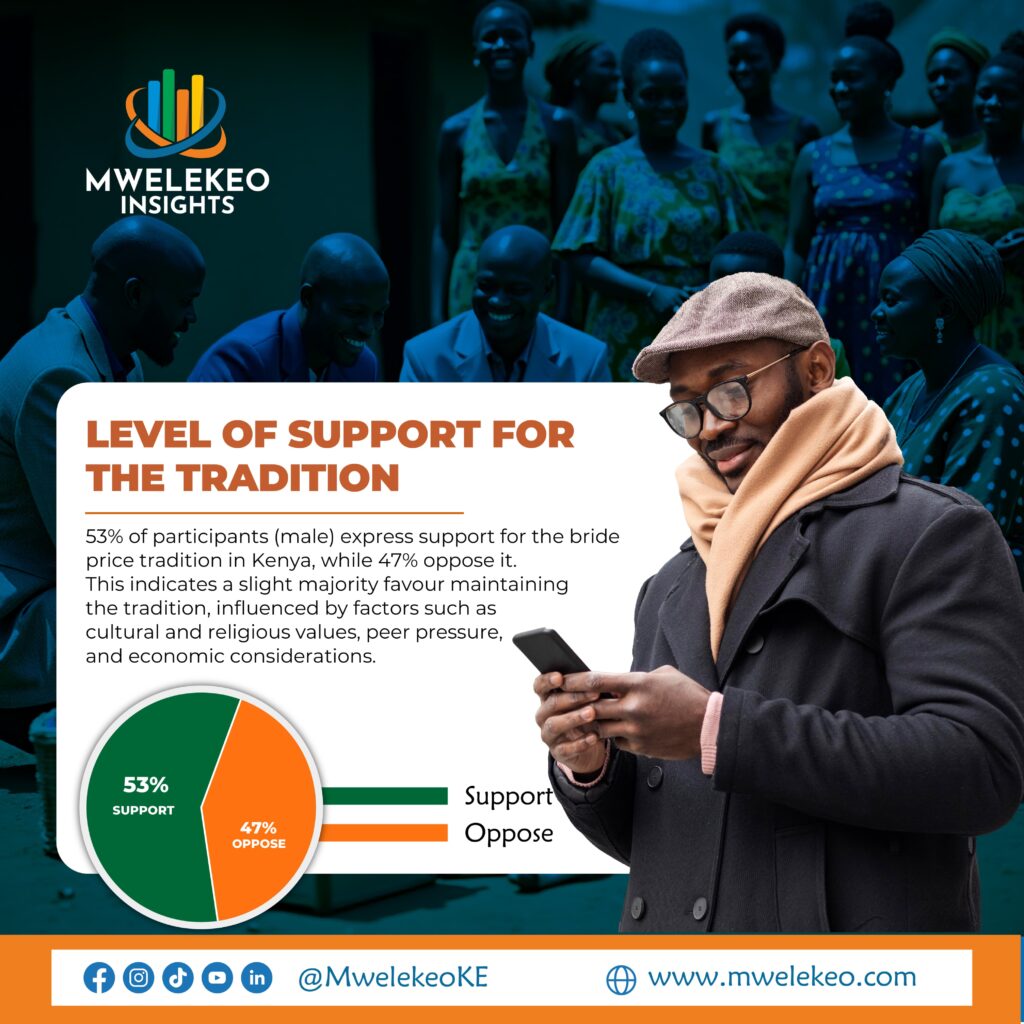
Support is stronger among older and rural men who view bride price as a cultural obligation symbolising respect, family unity, and heritage.
In contrast, younger and urban men are more likely to question its relevance, with many seeing it as outdated or problematic. Exposure to global views, modern education, and media influences have pushed many younger men to reconsider the practice in light of contemporary gender roles and economic challenges.
Economic realities have emerged as a major influence on attitudes. Many younger men said they face financial pressure to meet bride price demands, which often include money, livestock, and expensive gifts. About 54% said these costs affect their decision to marry, especially those without stable income.

Among unmarried men, 58% agreed that the bride price tradition delays marriage due to unaffordable expectations. Even among married men, 42% acknowledged it had an impact on their decision.
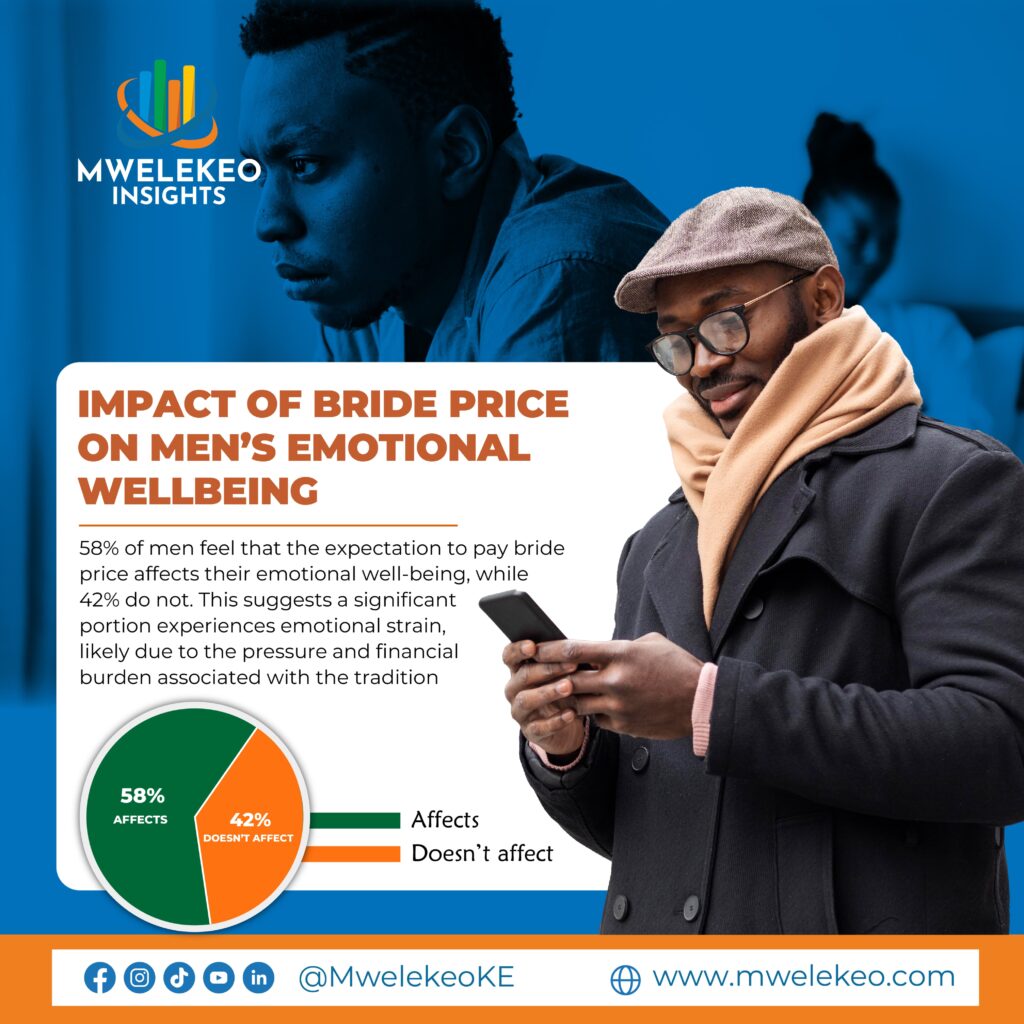
Respondents also linked the pressure to emotional stress, with 58% saying the bride price expectation affects their emotional well-being, while only 42% disagreed.
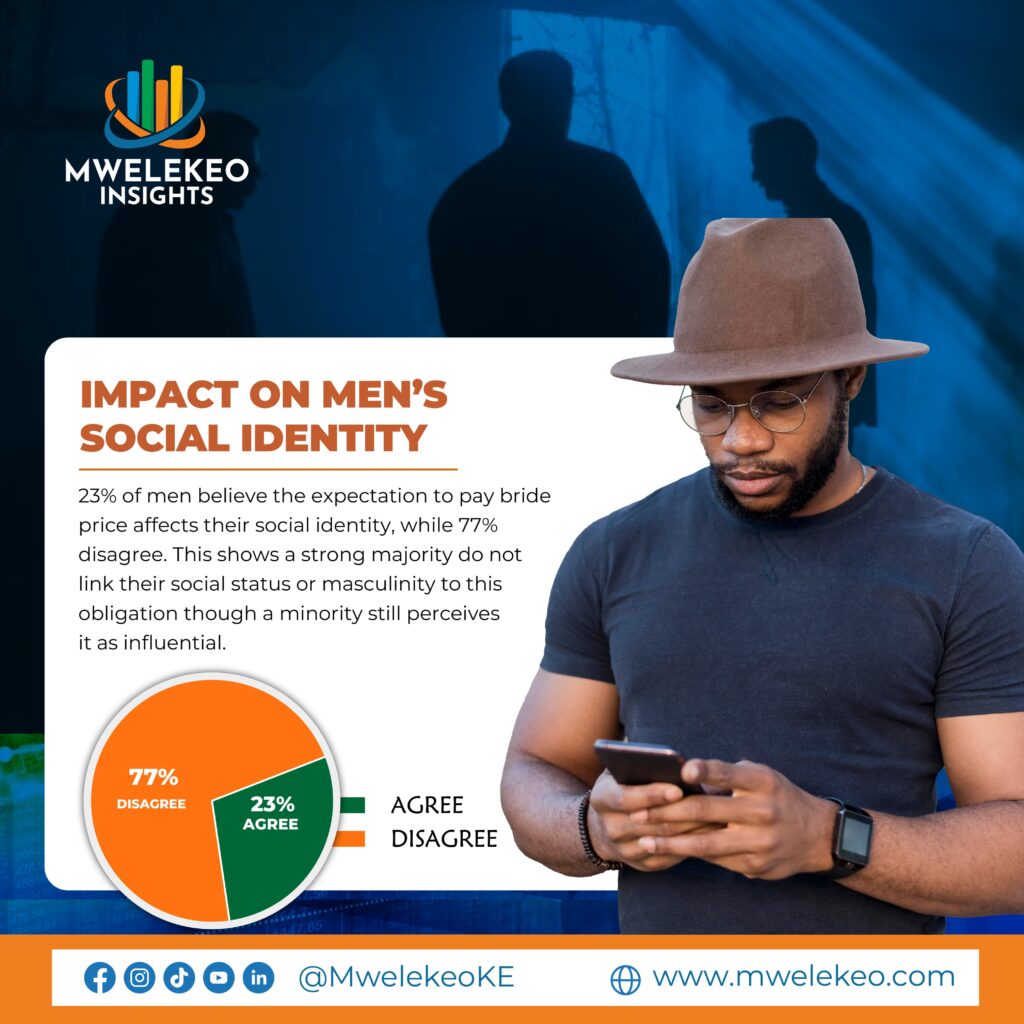
However, 77% said it does not affect their social identity, although 23% still linked it to how society views them as men.
Religious and cultural norms continue to play a role in shaping support. 66% of men agreed that bride price is aligned with religious teachings and cultural practices, but 34% saw room for interpretation, suggesting that symbolic or reduced gestures could be equally meaningful.
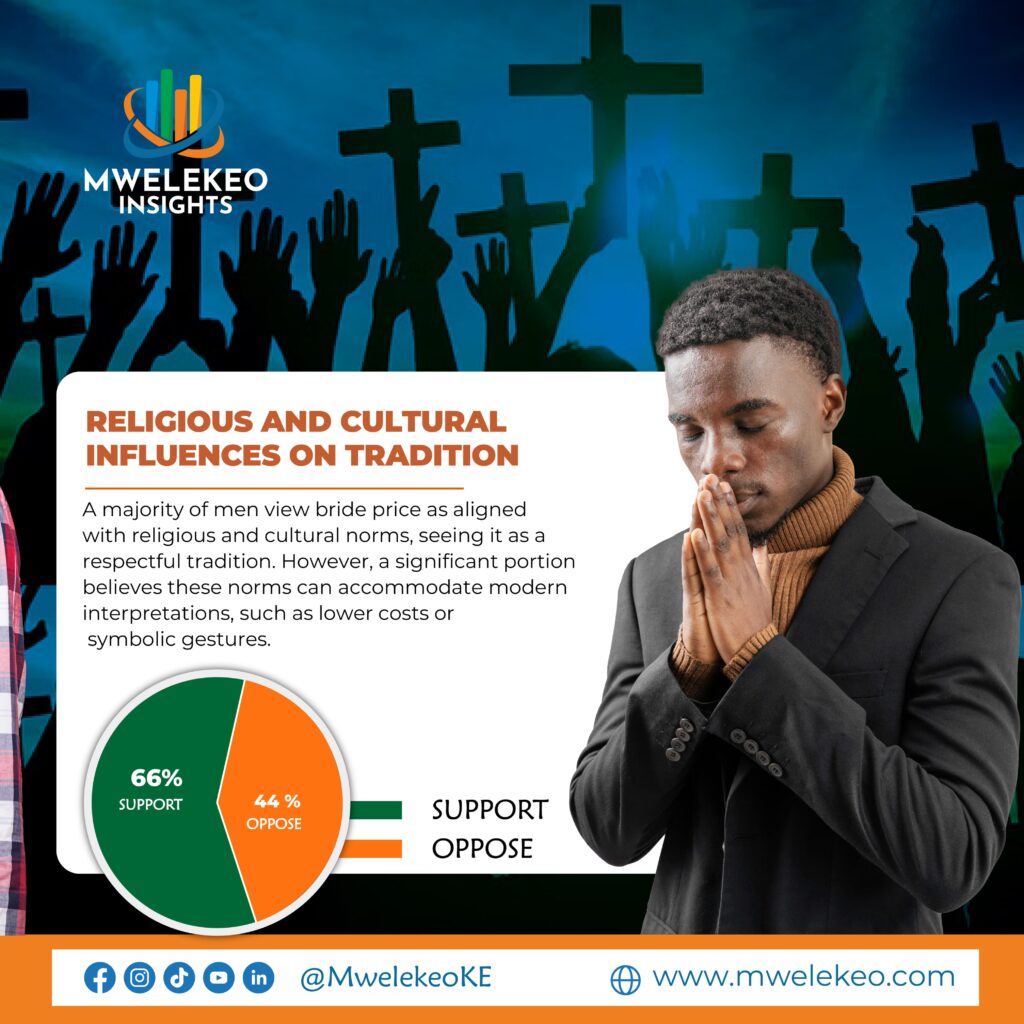
Some progressive views encouraged adapting the tradition to fit current economic conditions and gender values.
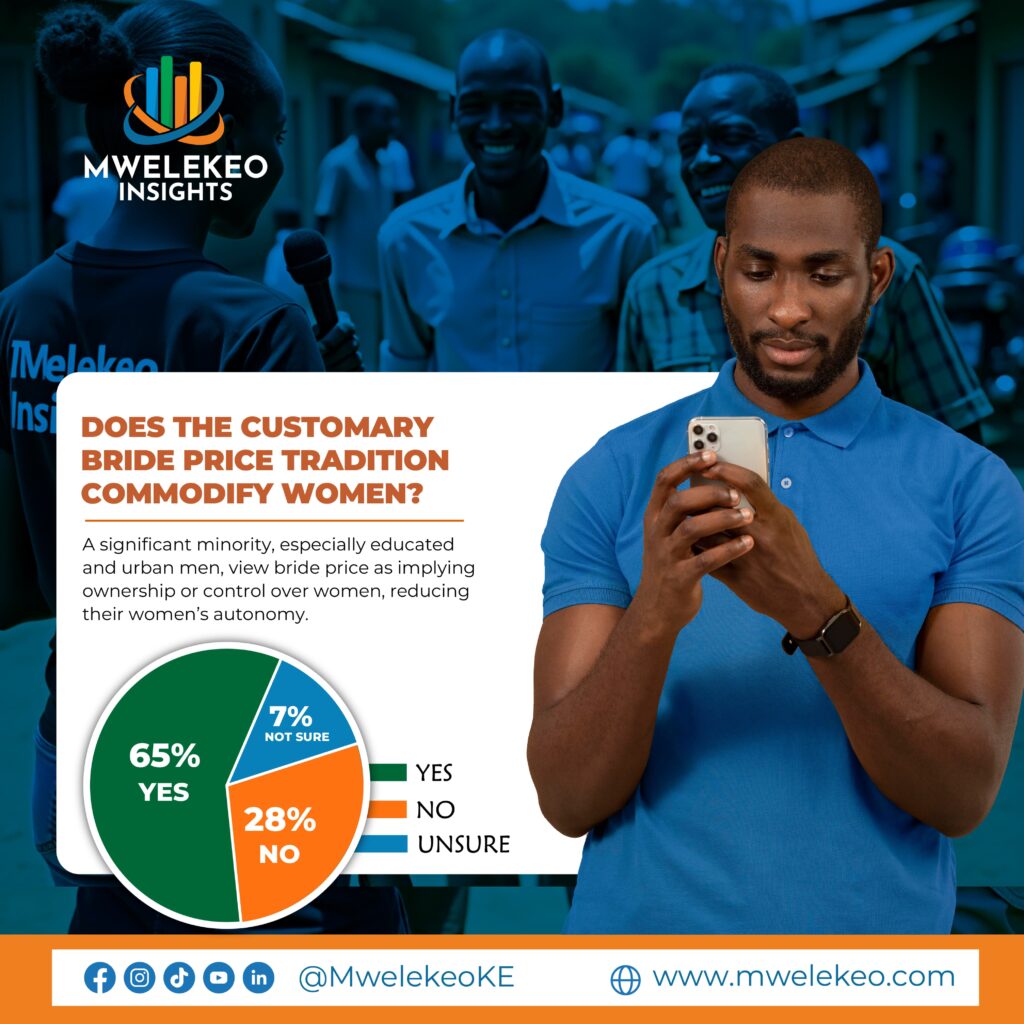
On the issue of whether bride price undermines women’s autonomy, 65% said it does not commodify women, but 28% argued it reinforces patriarchal control, especially among educated and urban men exposed to feminist ideas and online discussions.
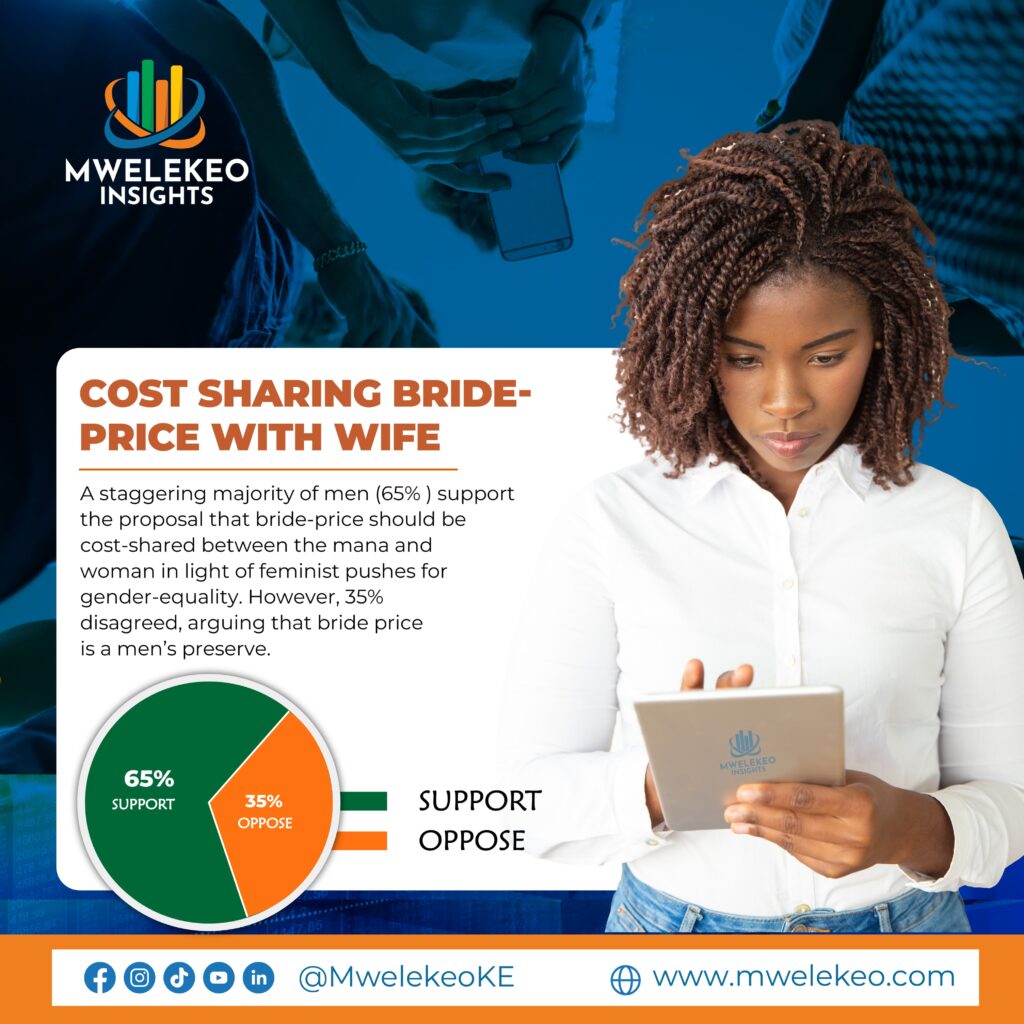
When asked about alternatives, 65% of men supported cost-sharing the bride price with their wives, while 35% opposed it.
A large majority of 89% supported gradual payment of bride price over time rather than a one-off burden.

Another 83% supported the idea of treating bride price as a reward for good behaviour within marriage, not a prerequisite.
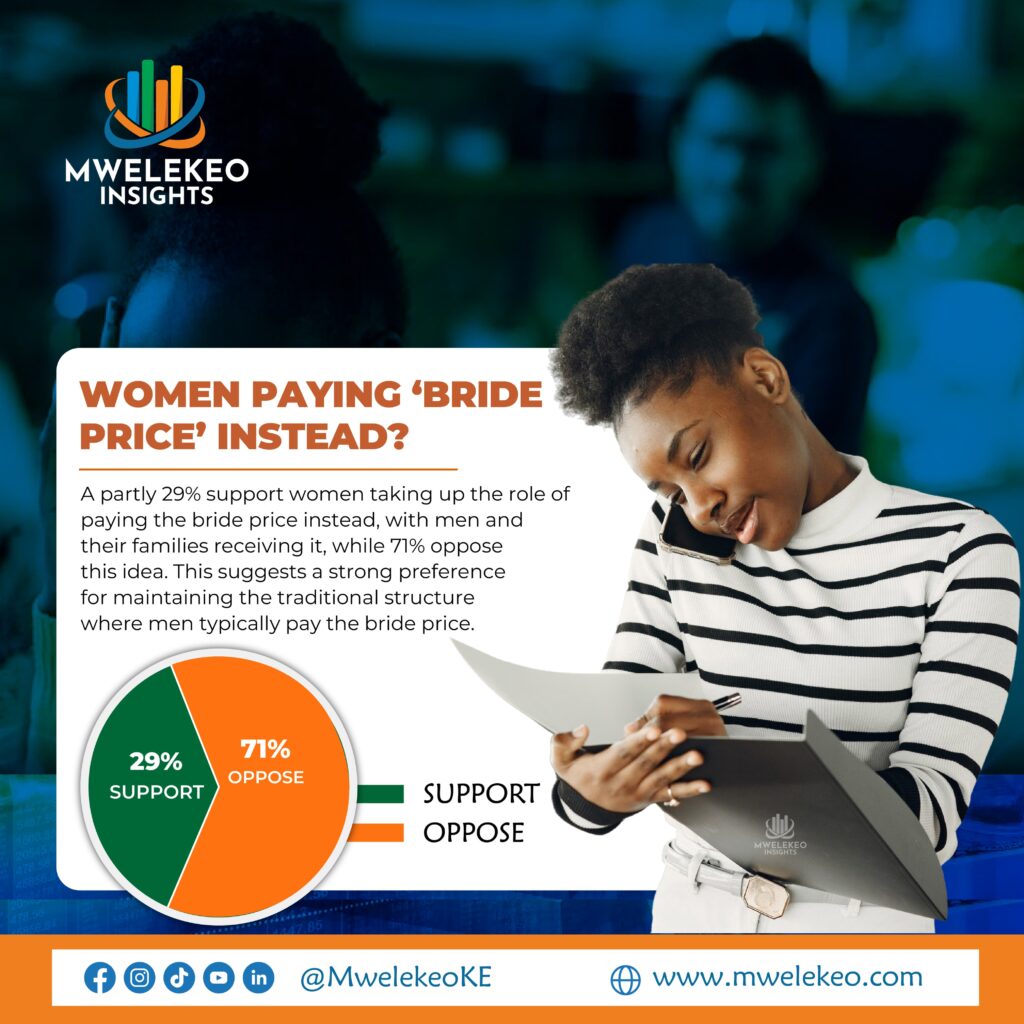
However, 71% opposed the idea of women paying the bride price to men, showing most prefer to maintain traditional gender roles in this context.
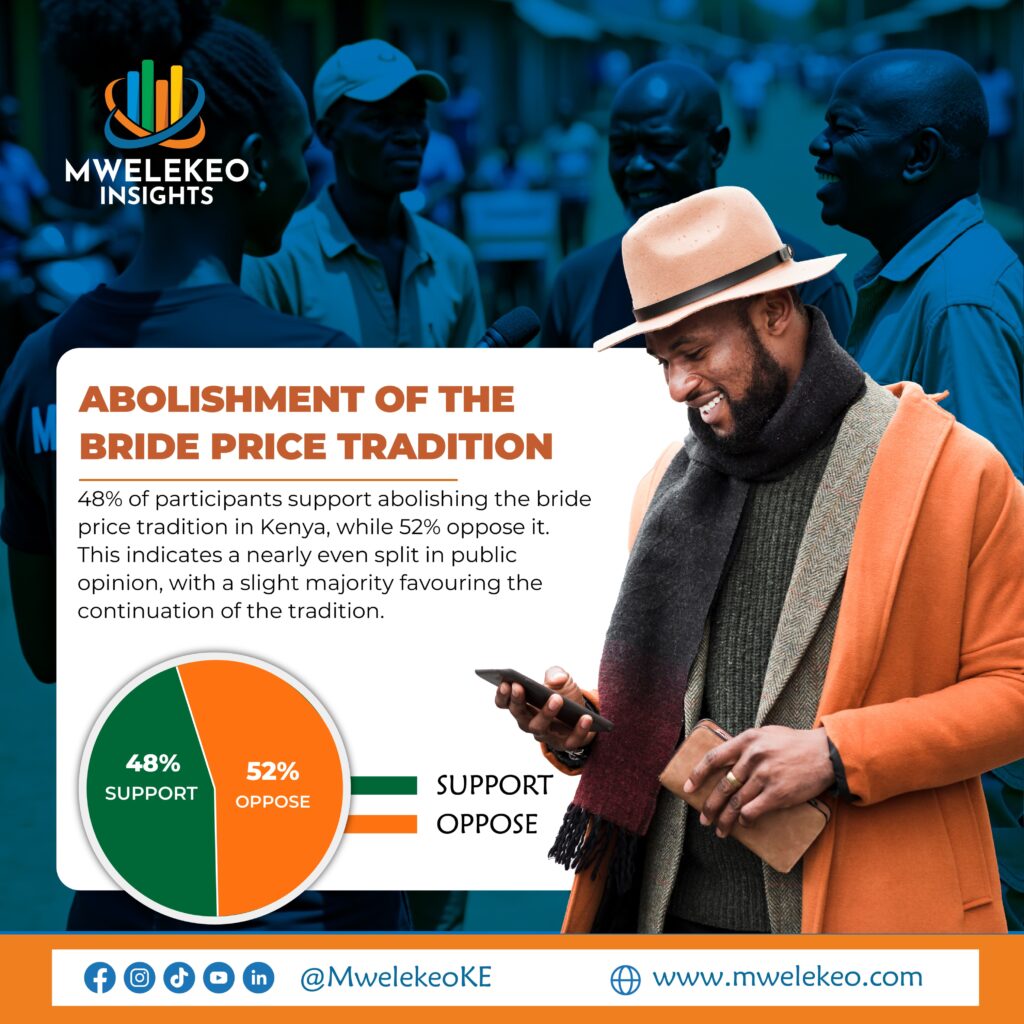
Opinions on abolishing the tradition were nearly evenly split, with 48% supporting its removal and 52% opposing it.
The Mwelekeo Insights study reveals that while many men still value the tradition, there is a clear push for reform to make it more inclusive, affordable, and relevant to modern relationships.

