


A study by Mwelekeo Insights has revealed that 65% of Kenyan men support the idea of cost-sharing the bride price with their wives.

This suggestion, once considered controversial, now reflects changing attitudes towards traditional marriage customs. It shows that many men no longer view bride price as a responsibility that should fall solely on them. Instead, there is growing support for more practical and flexible approaches.
Among the most supported alternatives was the idea of paying the bride price gradually over time rather than all at once.
This proposal was backed by 83% of the respondents, many of whom felt that a one-time, high-cost payment was financially unrealistic.
Another idea that drew attention was turning the bride price into a reward system based on the wife’s good behaviour, an idea that 89% of men agreed with.

However, 11% strongly opposed it, saying it reduces the value of marriage and could create unhealthy power dynamics.
Meanwhile, 35% of the respondents rejected the cost-sharing idea entirely, insisting that bride price should remain the man’s full responsibility.
The survey by Mwelekeo Insights involved Kenyan men aged between 18 and 45 and examined various aspects of the bride price tradition.
One of the most divisive findings was that 48% of participants supported the complete abolishment of the tradition, while 52% wanted it maintained.
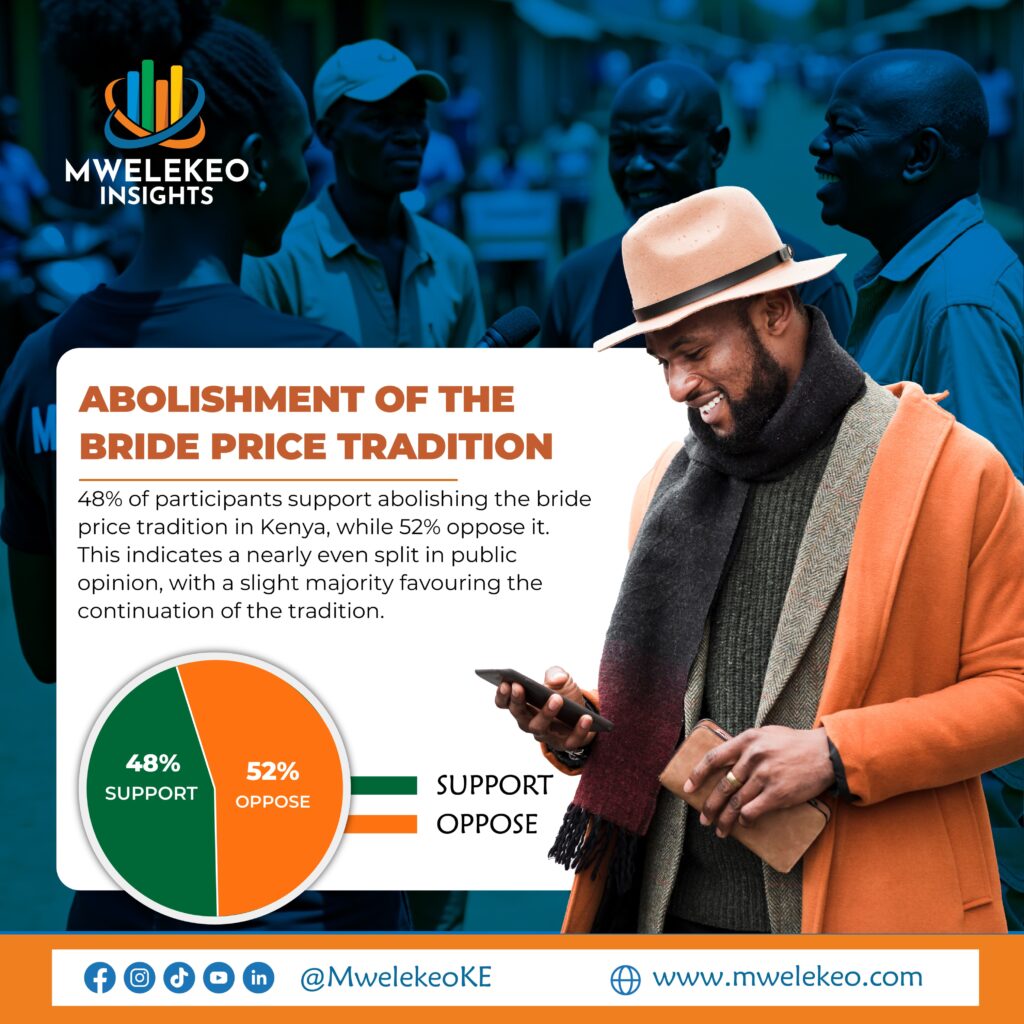
This shows a near-equal split in opinion, with the country still torn between preserving cultural values and adapting to modern realities.
On whether women should be the ones to pay bride price instead of men, only 29% supported the idea while a strong 71% opposed it.

The study indicates that while men are open to reform, most still believe the tradition should remain gender-specific, though modified to fit present-day challenges.
A deeper look at the findings reveals that religious and cultural beliefs play a significant role in shaping men’s views. About 66% of the respondents agreed that bride price is supported by religious and cultural norms, especially in Christian communities.
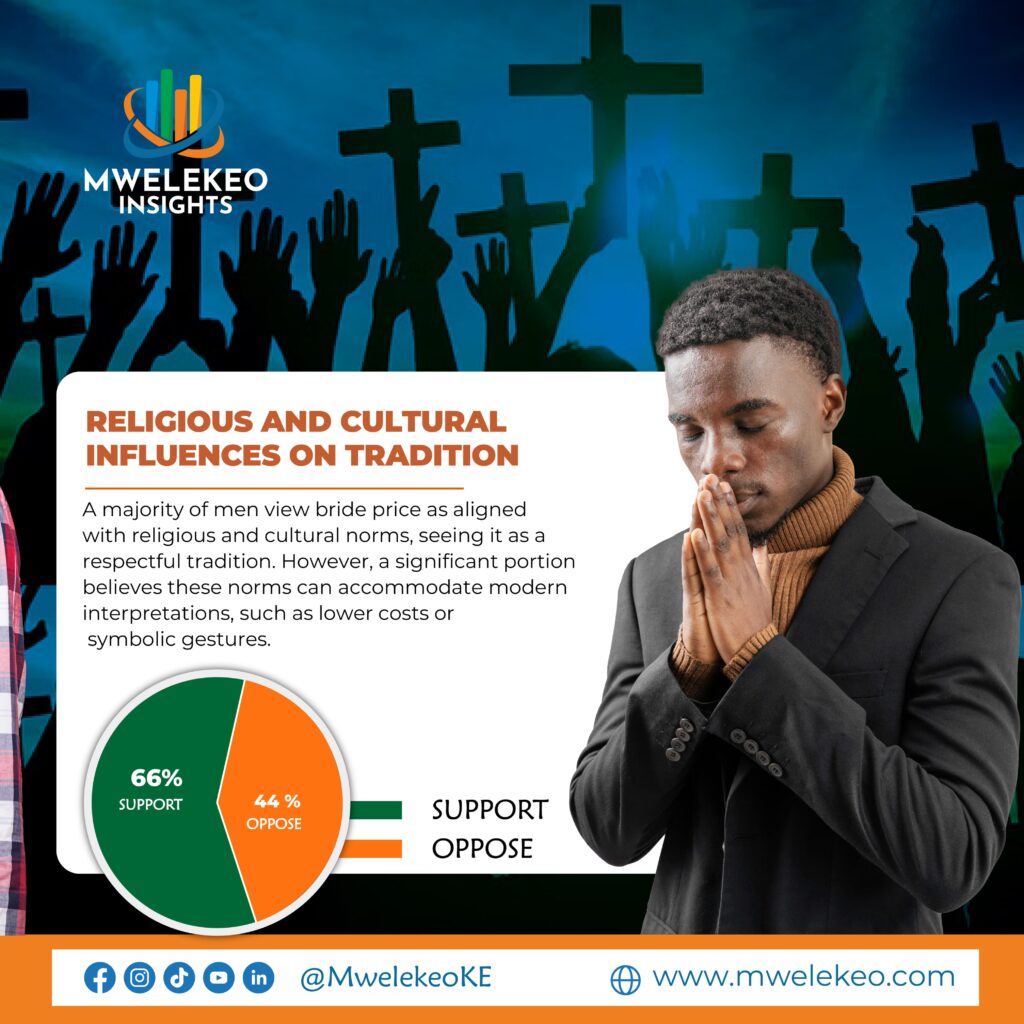
However, 34% felt that modern interpretations of these norms could allow for less costly or symbolic practices. Some men mentioned that progressive religious teachings already support the idea of adapting such traditions in ways that remain respectful but are more sustainable.
Economic hardship also strongly influences attitudes toward bride price.
According to the study, 54% of men agreed that the high cost of bride price affects their decision to marry. Many younger men, especially those without stable incomes, reported feeling discouraged from marriage altogether due to the financial strain.

Married men shared similar concerns, with 42% saying bride price affected their decision to marry, compared to 58% who disagreed.
The tradition is seen by many as a financial burden that delays marriage and creates pressure from families and communities.
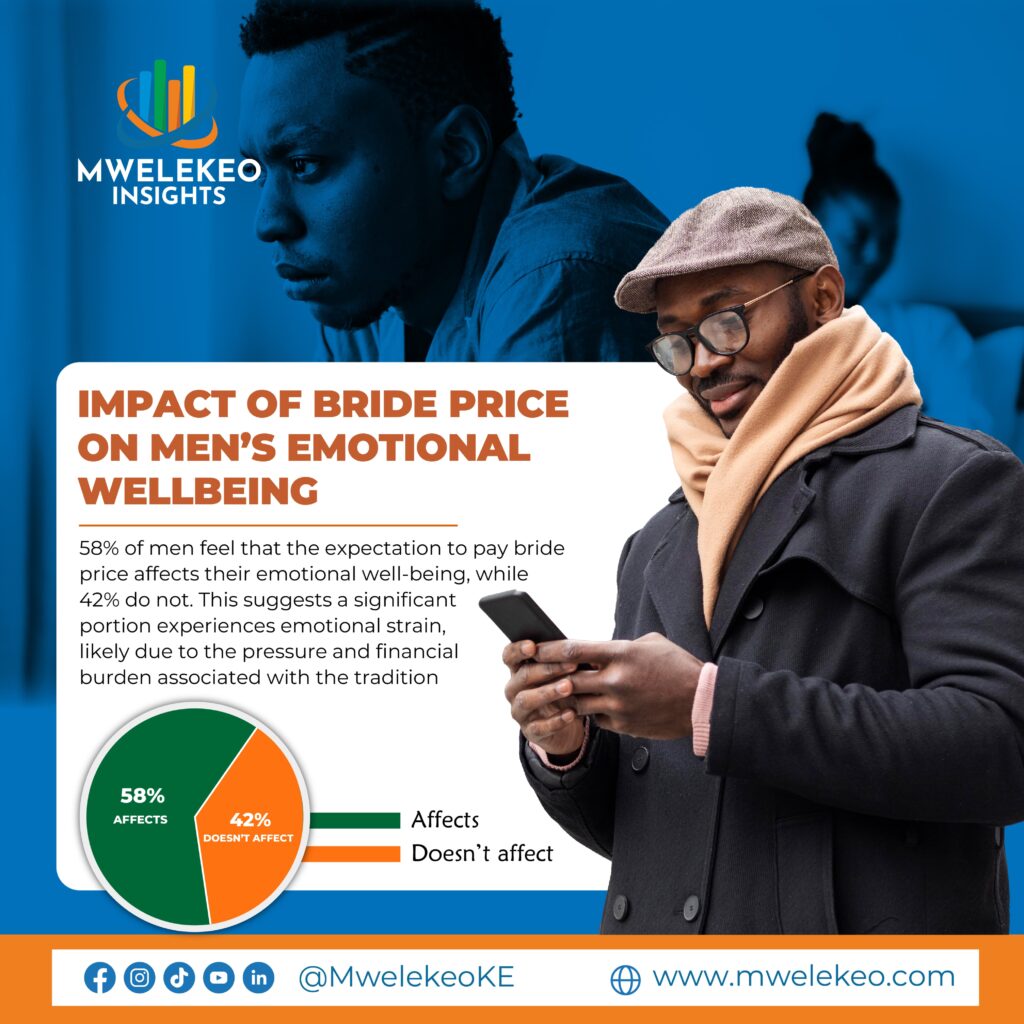
The emotional and social pressure linked to bride price was also highlighted in the findings. Around 58% of men admitted that the expectation to pay bride price negatively affected their emotional well-being.
Some described feeling stressed or anxious, particularly when unable to meet expectations.
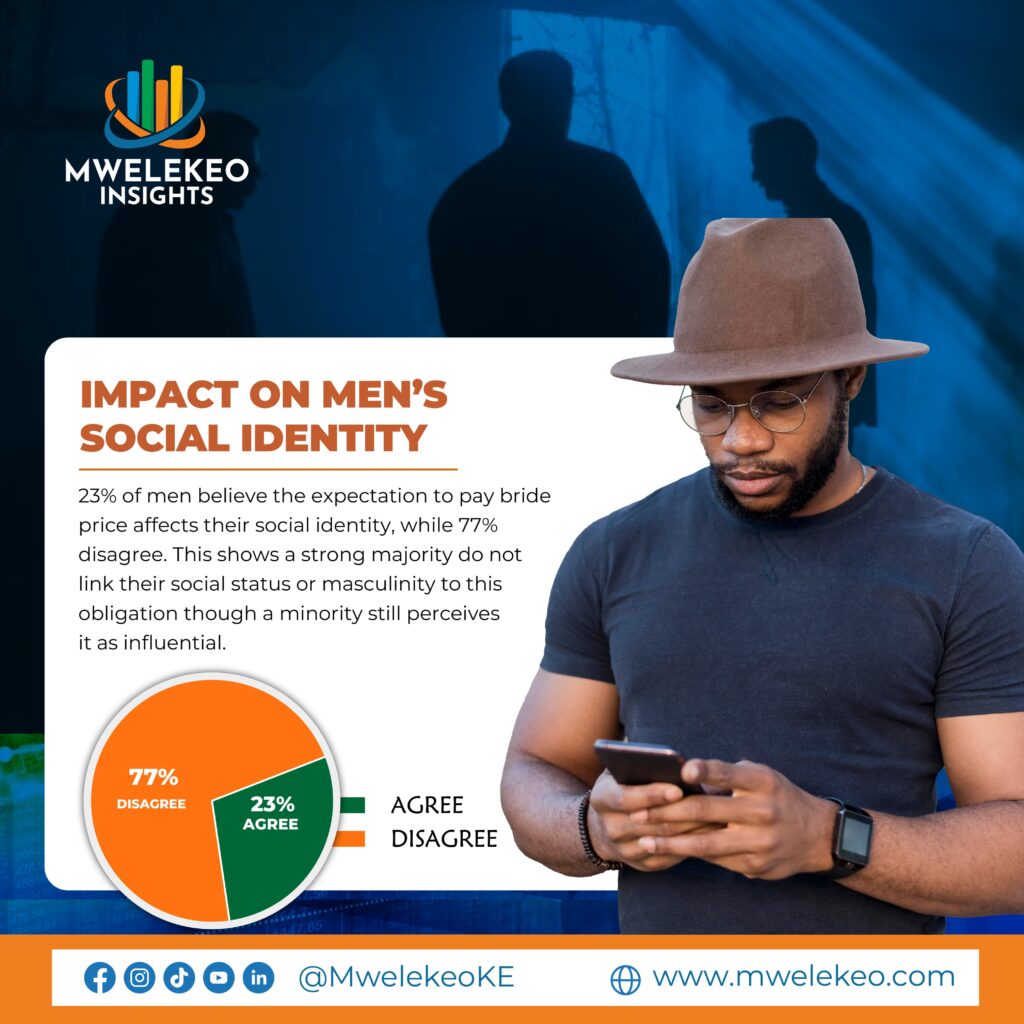
However, only 23% said it affected their social identity, with 77% indicating that they do not tie their sense of status or masculinity to bride price.
The study also touched on gender equality, with 65% of men stating that bride price does not reduce women’s autonomy. But a notable 28% felt otherwise, saying that the practice can lead to the objectification of women and reinforce outdated patriarchal roles.

These views were more common among urban and educated respondents, influenced by global views and feminist perspectives.
Overall, the Mwelekeo Insights study paints a complex picture of a tradition under pressure. While many men still value bride price as a cultural symbol of respect and family unity, a large number are calling for its reform.
The most supported reforms cost-sharing and gradual payment point to a desire for balance between cultural heritage and economic realities.
The findings also show that most men are not seeking to do away with the practice entirely but want it to evolve with the times.

