


Latest survey conducted by Mwelekeo Insights has examined how Kenyan men aged 18 to 45 view the bride price tradition in modern times. While this custom remains deeply rooted in many communities as a symbol of respect and family unity, the study shows a significant generational and social divide in attitudes toward the practice.
The research gathered data from both urban and rural male participants, with a nearly equal split between married (49%) and unmarried (51%) individuals.
Age distribution was also balanced, with 52% between 18–30 years and 48% between 31–45 years. Interestingly, 50% came from urban areas while 50% were rural-based.
Employment levels varied, with 47% employed and 53% unemployed.

Educational access and religious beliefs also influenced perspectives, with 45% having tertiary education and 55% lacking it.
In terms of religion, 40% identified as religious while 60% did not.The first focus of the study was on the general level of support for bride price.Out of all participants, 53% supported the tradition while 47% opposed it.
The reasons for support included love, cultural and religious influence, and societal expectations. Those opposing cited financial burden, changing times, and the perception that it commercialises marriage.
When broken down by age, support among older men was higher. Among those aged 31–45, 75% supported the tradition, while only 25% opposed it. Conversely, among men aged 18–30, 60% opposed the tradition while only 40% supported it.
A rural-urban divide was also observed. In rural areas, 80% supported bride price while only 20% opposed it. In urban areas, views were split 50-50.

This suggests that tradition remains stronger in rural areas and among older men, while urban and younger men are more open to rethinking the practice.

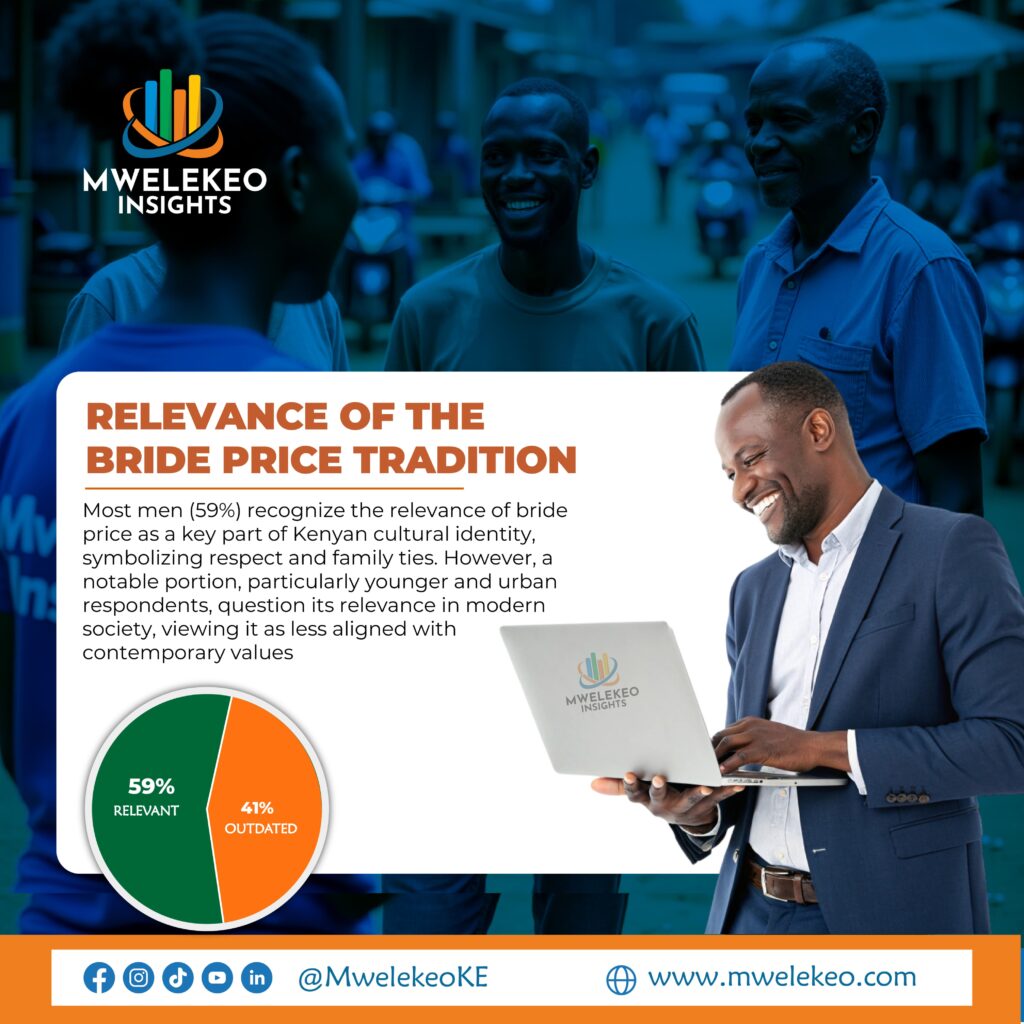
When asked whether bride price is still relevant today, 59% of respondents agreed it remains relevant while 41% disagreed.

Many saw it as an important cultural symbol. However, urban and younger participants, influenced by global culture and modern education, were more likely to view it as outdated.
Economic factors emerged as a major concern. High expectations involving cash, livestock, and gifts have made bride price a burden, especially for younger men. Many cited joblessness and the rising cost of living as key reasons why they would rather avoid or reform the tradition. These financial demands were seen as a barrier to marriage and a source of stress.

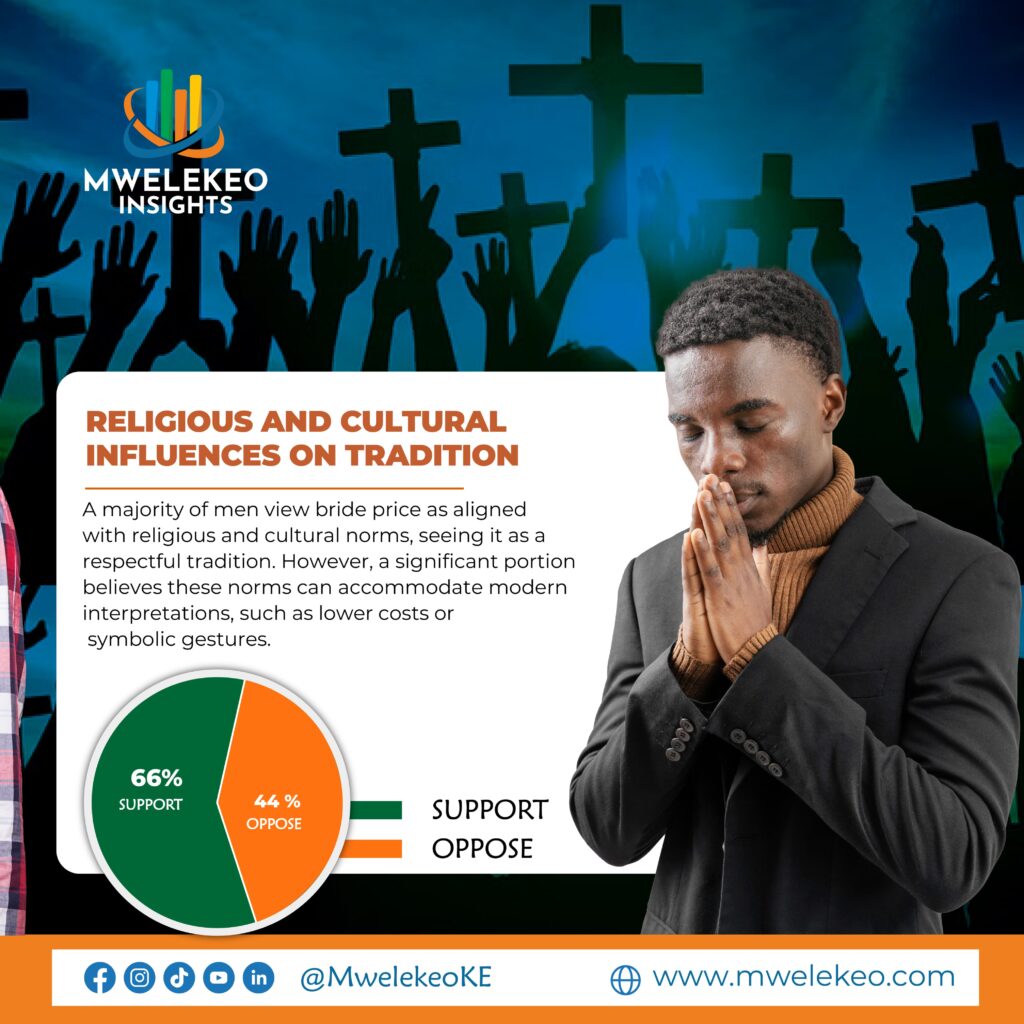
Religious and cultural influences still play a role. 66% of respondents agreed that religion and culture support the bride price tradition, while 34% disagreed.

Some men pointed out that religious doctrines and community norms promote it as part of marriage, but others suggested it can be modernised or made symbolic instead of costly.The study also addressed the impact of bride price on women’s autonomy.
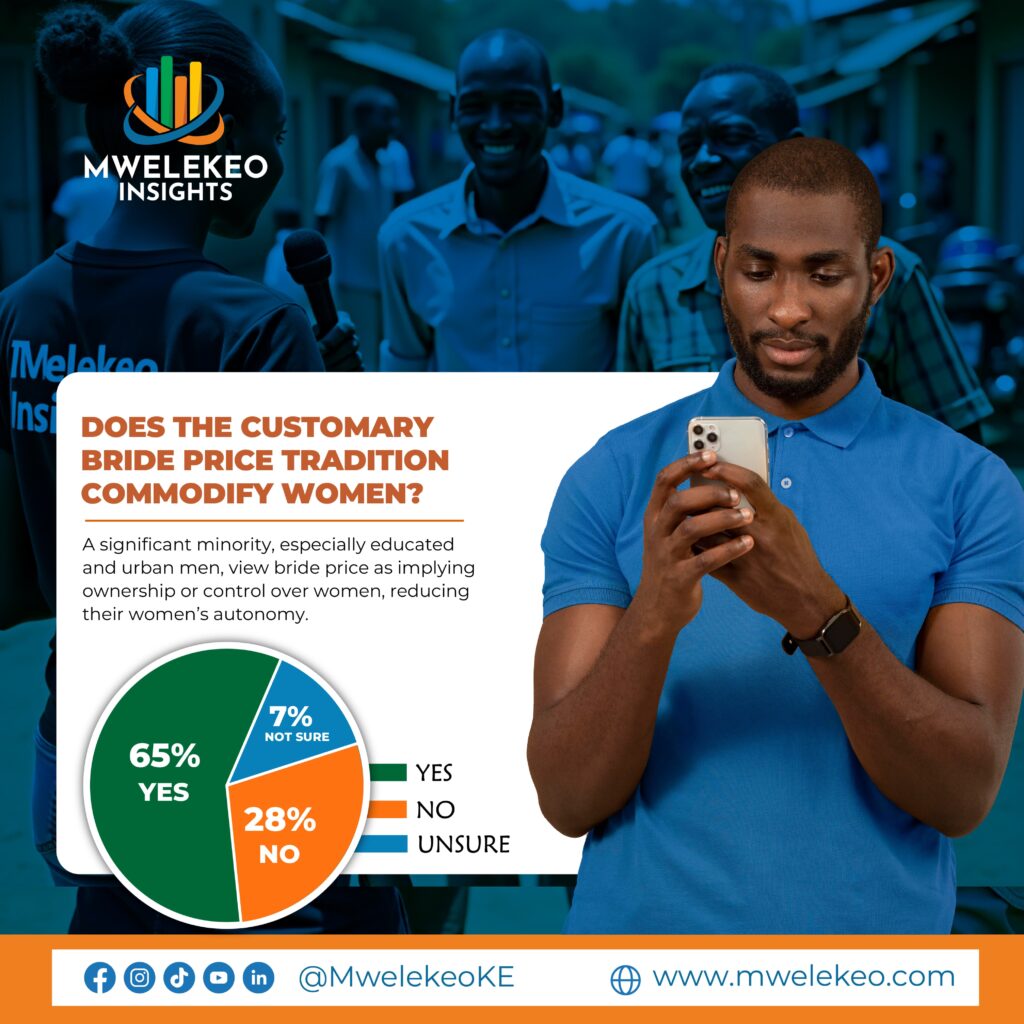
A significant 65% of men said the tradition commodifies women, while 28% disagreed and 7% were unsure. Educated men especially saw it as a form of control and ownership, influenced by patriarchal beliefs.
The bride price was also found to affect men’s decision to marry. Among married men, 68% said bride price had affected their decision, while 32% said it hadn’t.
Among unmarried men, 42% agreed it affected their willingness to marry, while 58% said it didn’t. This suggests economic and social pressures can delay or discourage marriage altogether.

When it comes to emotional well-being, 58% of men said the pressure to pay bride price affects them, while 42% said it does not.
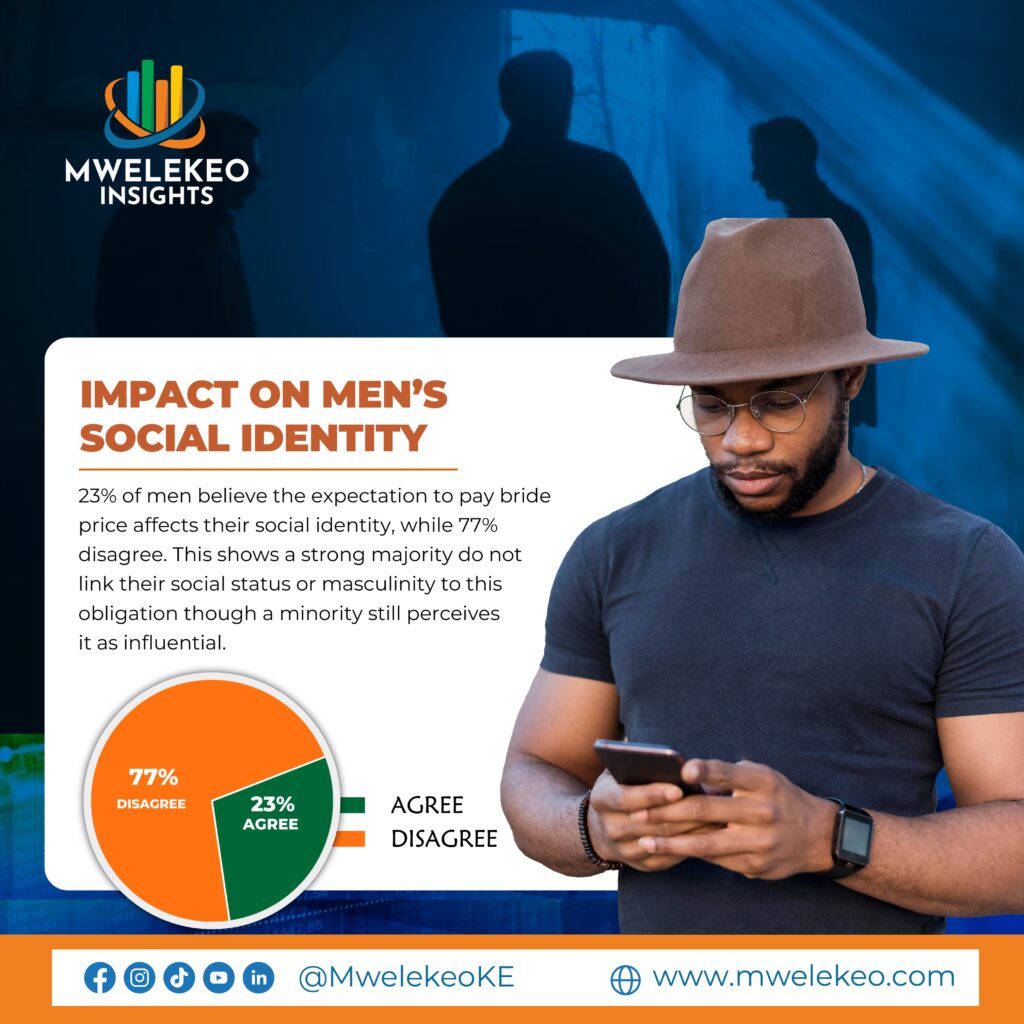
On social identity, only 23% felt it had an impact, while 77% felt their status was not linked to paying bride price.The study also explored alternatives.
A majority (65%) supported sharing the bride price cost with the wife.
Even more, 83% supported gradual payments over time, and an overwhelming 89% agreed that bride price should be treated as a reward for good behaviour rather than a precondition for marriage.
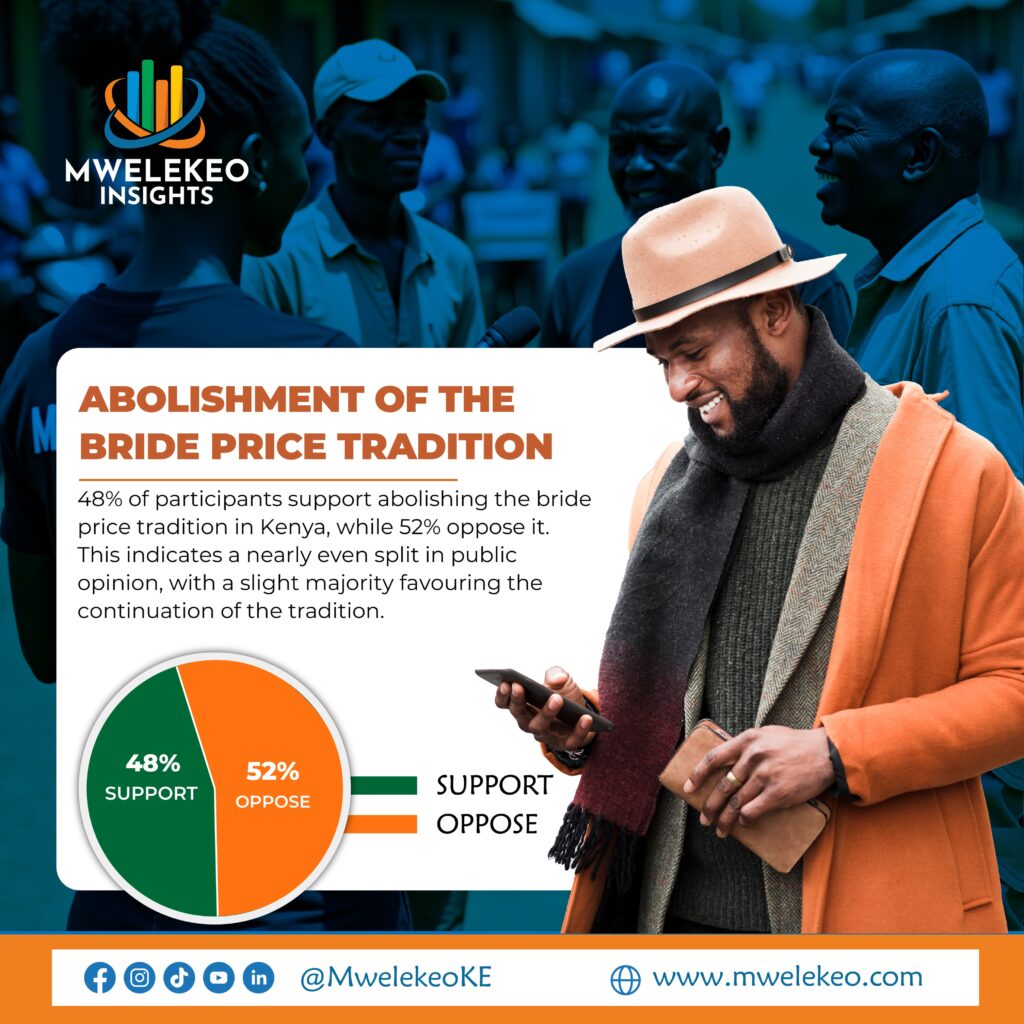
On the question of abolishing the tradition entirely, responses were almost split: 48% supported abolishment while 52% were against it.

However, the idea of women paying bride price instead was rejected by 71%, with only 29% in support.
Mwelekeo Insights concluded that while the bride price tradition still holds cultural weight among many Kenyan men, attitudes are shifting. Younger, urban, and educated men are more critical of the practice, citing financial, ethical, and gender equality concerns. The survey shows a clear clash between cultural heritage and modern values, with calls for reform growing stronger across various segments of society.
Access them on their official website and all social media handles@MwelekeoKe.

