


Safaricom Ordered to Pay Entrepreneur KSh 1.4 Billion for Stealing His Idea
Safaricom has been hit with a major court order.
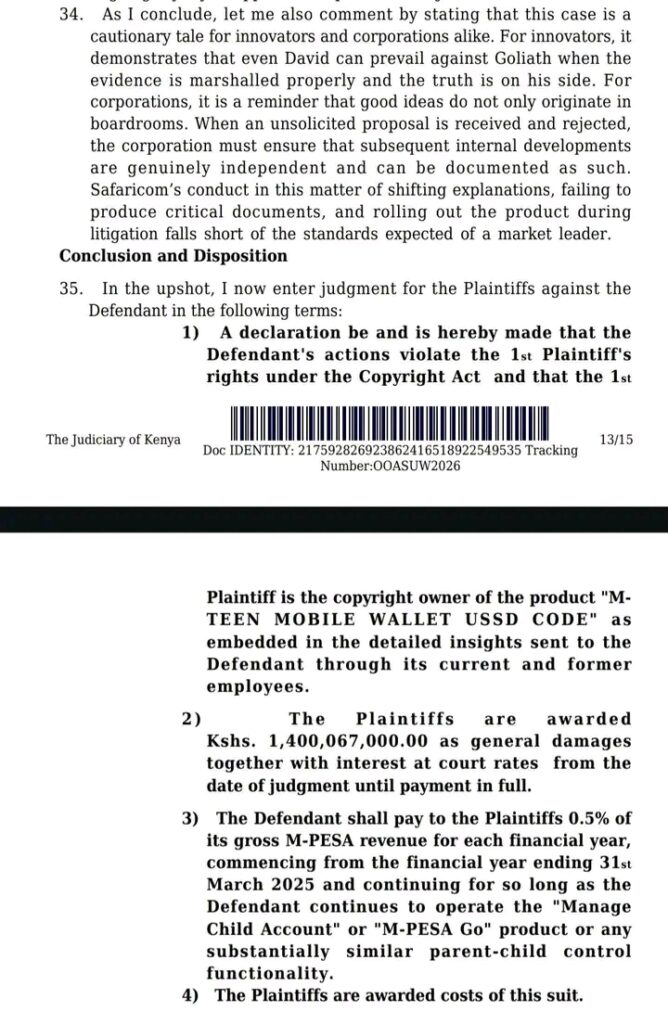
The High Court of Kenya ruled that the company must pay entrepreneur Peter Nthei, also known as Muoki, KSh 1.4 billion for copying his idea.
This comes after Safaricom dismissed his M-Teen Mobile Wallet USSD code concept and later launched a very similar product.
The case started in 2021 when Muoki pitched his idea to Safaricom executives. His product aimed to give parents better control over how their teenagers spend money through M-Pesa.
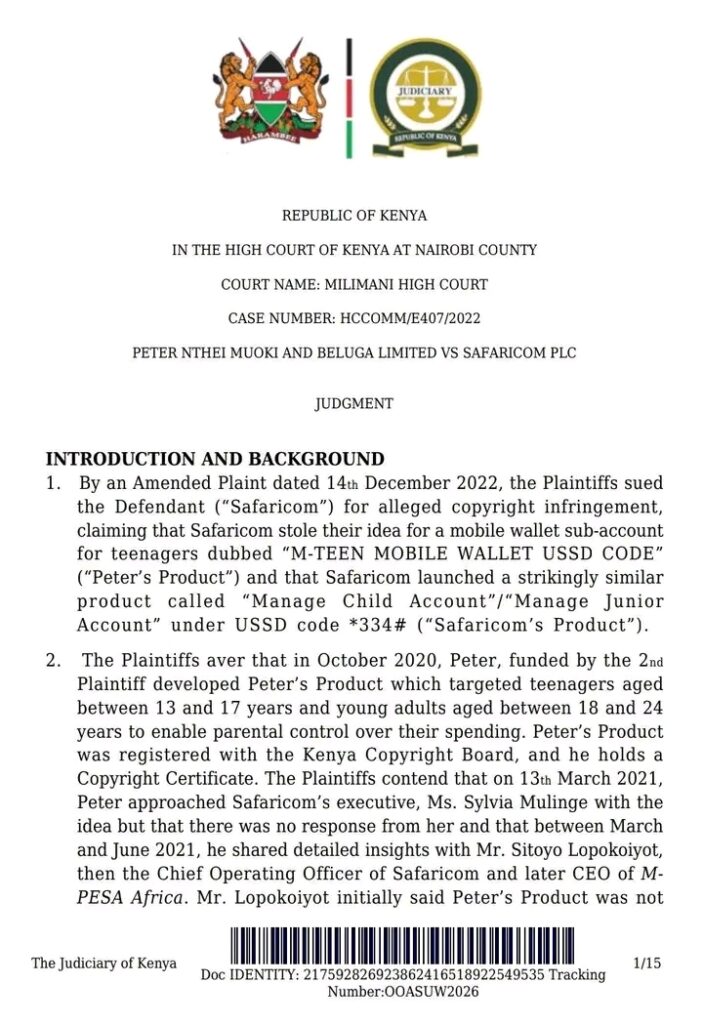
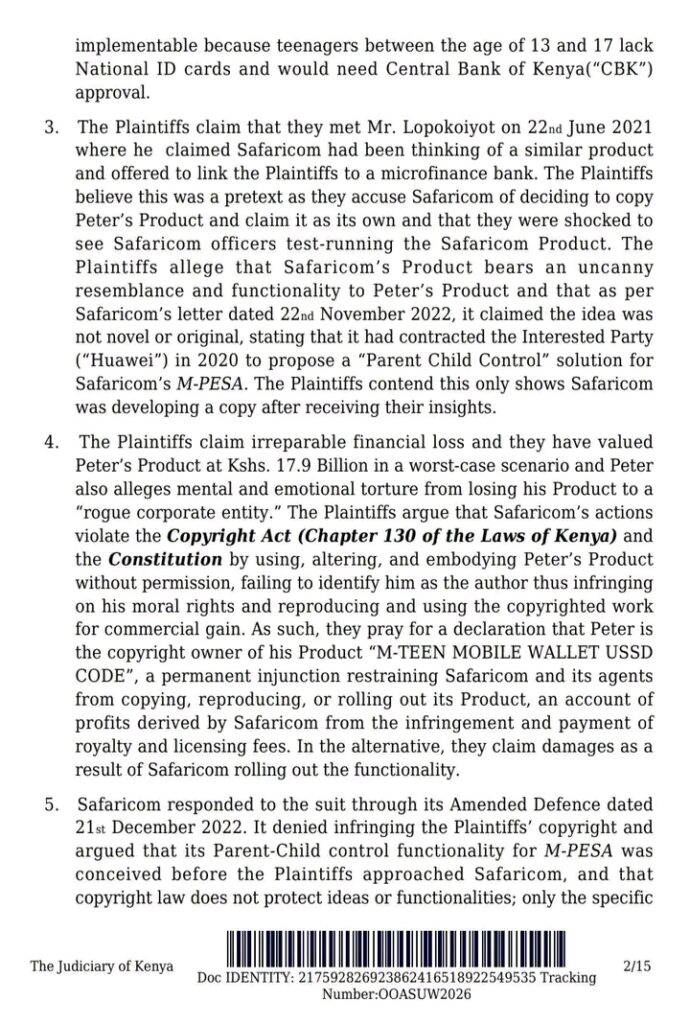
Safaricom turned it down, citing regulatory issues and other challenges. But months later, in November 2022, the company rolled out “Manage Child Account” and “M-PESA Go,” features that closely matched Muoki’s detailed USSD flows and system responses.
Judge Mongare found clear evidence of copying. Safaricom claimed they developed the product independently with Huawei and had a verbal request from the Central Bank of Kenya.
However, the court noted a lack of documents to support this. The similarities were too strong to ignore. Muoki’s work was protected as a literary expression, not just a basic idea.
The judge also pointed out that M-Pesa revenue jumped by about 30% after the disclosure.
The award equals 1% of Safaricom’s 2024 M-Pesa revenue. On top of that, the court ordered a compulsory license.
Safaricom must now pay Muoki 0.5% of its gross M-Pesa revenue every year as long as the product runs.
This ruling exposes a common problem in Kenya’s business world. Big companies often listen to ideas from small innovators, reject them as unworkable, and then bring out almost the same thing themselves.
Many Kenyans have shared similar stories of their pitches being dismissed only for the concepts to appear later under the company’s name.
It discourages creativity and punishes those who take risks to develop new solutions.
Muoki fought for years to get justice.
His win shows that courts can hold powerful firms accountable when evidence of theft is clear.
But the battle may not be over. Safaricom is likely to appeal, and past cases suggest higher courts sometimes side with big players.
This case sends a strong message. Ideas have value. Innovators deserve protection. Companies cannot keep taking shortcuts by stealing from the very people they should be partnering with.
For Kenya’s tech and startup scene to grow, intellectual property must be respected. Entrepreneurs need fair chances, not exploitation.
If big corporations continue this pattern, they risk killing the innovation that helps the economy move forward.
Muoki’s victory is a step in the right direction, but real change requires stronger enforcement and awareness across the industry.

